
Guides
Prism Siege: movement first, upgrades next
Find your footing in Zarocer’s geometric survival game. Learn the controls, build useful upgrade combinations and resume your run.
October 8, 2026 · ZarocerRead guide
Compare Nonogram Atelier, Hitori and Futoshiki through worked deductions, real controls and different rules. Choose your next logic puzzle on Zarocer.
By Zarocer · October 11, 2026 · 7 min read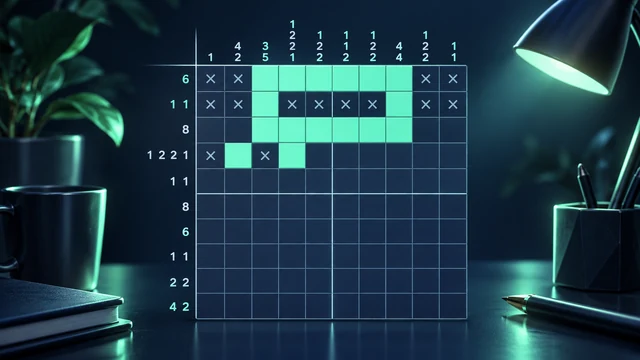
A grid filled with numbers can hide several completely different games. Nonogram Atelier asks which cells belong to a picture. Hitori asks which existing numbers must disappear. Futoshiki asks which missing numbers can fit between inequality signs. Their shared appearance makes them easy to group together, but choosing one is easier when you understand the decision each asks you to make. This comparison focuses on those decisions and the playable Zarocer versions, rather than ranking the games by an unsupported measure of intelligence or difficulty.
Start with the kind of information you enjoy interpreting. If you like turning small clues into a visual result, a nonogram is a natural choice. If you like investigating the consequences of removing something, try Hitori. If ordered candidates and numerical limits appeal to you, try Futoshiki. None is a required stepping stone to another. A comfortable first puzzle is one whose rules you can explain before making a move, even if you need time to find the solution.
The numbers around a nonogram describe consecutive groups of filled cells. A clue of 3 means one uninterrupted group of three, not three filled cells scattered anywhere along that line. A clue of 2, 1 means a group of two followed by a group of one, with at least one empty cell separating them. The order matters. Row clues and column clues refer to the same board, so a deduction on one line becomes information for the crossing lines.
Consider a five-cell line with a single clue of 3. Its filled group could occupy cells one to three, two to four, or three to five. The middle cell appears in every arrangement, so it must be filled even though the group's full position is not known yet. That overlap is a useful first technique. It is a statement about all legal arrangements, not a guess that the picture probably contains a shape in the middle.
An empty cell that you have proved is different from an undecided cell. Cross marks help keep that distinction visible. Once a group has reached its required size, the adjacent separator can become decisive information. On a five-cell line with clues 2, 2, the only arrangement is two filled cells, an empty separator, and two more filled cells. The separator is part of the reasoning, not leftover space to ignore until the end.
Nonogram Atelier supplies Fill and Cross tools, right-click marking, keyboard focus, undo and optional hints. Its published description lists 5 × 5, 8 × 8 and 10 × 10 boards, plus a daily 8 × 8 challenge. Use the smaller board to practise reading runs before increasing the amount of information you track. Three hints are available per puzzle, but a revealed answer and a deduction you made yourself serve different purposes when learning the rules.
Hitori begins with numbers already inside the cells. You shade selected cells so the remaining light numbers do not repeat within any row or column. That condition is only one part of the puzzle. Dark cells cannot share an edge, and all remaining light cells must stay connected through their sides. A move that removes a repeated number can still be wrong because it breaks one of those other conditions.
This changes what a useful question looks like. Instead of asking which number belongs in a blank, ask what would happen if a particular existing cell became dark. Which neighbors would have to remain light? Would a corner lose its only connection? Would another copy of the same number be forced to remain? The useful information often lies in the consequences of a choice rather than in the number printed on the cell itself.
Read Nikoli’s original Hitori rules
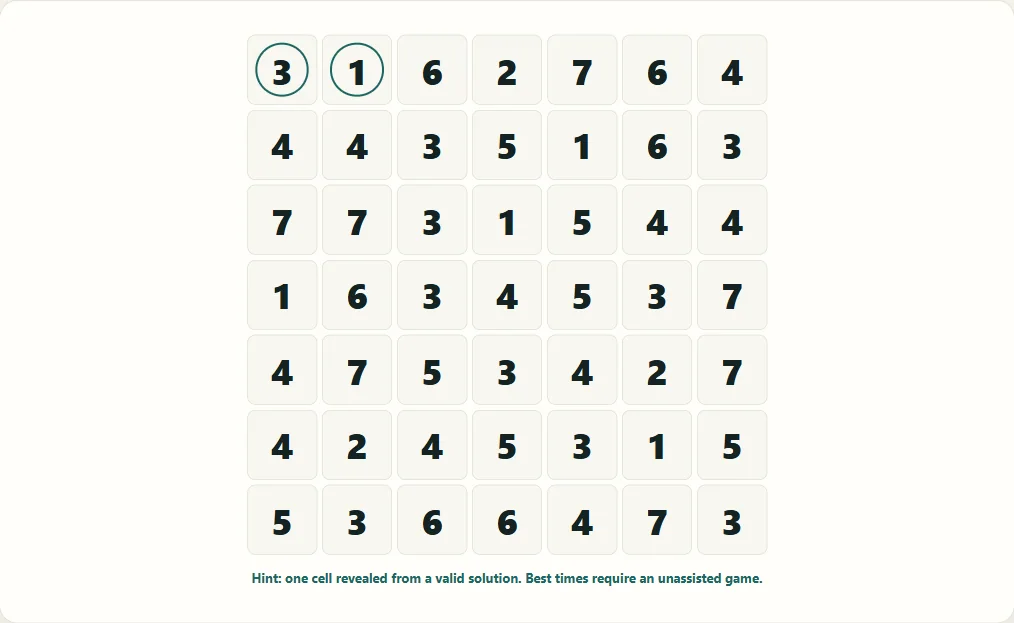
Suppose three adjacent cells in a row read 2, 5, 2. The middle cell cannot be dark: that would force both adjacent cells to stay light, leaving two light 2s in the same row. Therefore the middle cell must remain light. This reasoning uses both the duplicate rule and the no-touch rule. It does not tell you which of the two 2s is shaded; the crossing columns and connectivity still determine that decision.
The Zarocer implementation offers light, dark and circled marks. A circle helps record that a cell should remain light without replacing its number. Its current generated boards use 5 × 5, 6 × 6 and 7 × 7 sizes, while the daily board uses 6 × 6. Check the native hint rules before comparing personal times: revealed hints affect eligibility for a best time. A larger board is more information to manage, not proof that every individual deduction is more complex.
Futoshiki fills a number grid without repeating a number in a row or column. Inequality signs between cells add ordering constraints. Read each sign as a relationship between its two neighboring cells; do not infer that a number must increase along a whole row unless the visible chain actually requires it. A candidate can be ruled out by its row, its column or an inequality, and these sources of information work together.
On a five-by-five grid using the numbers one to five, a chain of three cells A < B < C gives immediate bounds. A cannot exceed three, B must be at least two and at most four, and C cannot be below three. It does not automatically fix the sequence as 1, 2, 3. Other combinations remain legal until the row and column constraints remove them. This distinction prevents a common mistake: confusing relative order with consecutive numbers.
Futoshiki's optional notes are useful when several candidates remain possible. Keep them synchronized with confirmed entries. If a five is placed elsewhere in a row, an old note containing five in that row is no longer informative. It has become a stale assumption. Before adding more notes, ask whether you have updated the ones that already exist and whether a newly fixed number changes an inequality chain.
The published version includes difficulty choices, a daily puzzle, undo and native hints. Use those tools according to the task you are trying to practise. A hint can help you inspect a consequence you missed, but rapidly accepting several hints may leave the underlying chain unexplained. For a learning session, pause after receiving help and reconstruct why the revealed entry fits its neighbors before continuing with the rest of the board.
Nonograms reward examining all possible placements of a run. Hitori rewards combining local exclusions with a board-wide connection rule. Futoshiki rewards narrowing candidates through order and uniqueness. These are useful distinctions for entertainment and puzzle selection. They do not establish that playing any of the games improves memory, treats a condition or produces a measurable cognitive benefit. Choose the experience you want rather than a health claim that the game cannot substantiate.
When you want a visual result, start with Nonogram Atelier. When you want a compact contradiction to investigate, choose Hitori. When you want to maintain candidate sets, choose Futoshiki. If none feels comfortable, reduce the board size or use the native instructions. Understanding why a move is legal is a better first goal than completing a puzzle quickly without knowing which rule supported your decisions.
Try one small board in each game, but use a different observation for each. In Nonogram Atelier, identify one forced filled cell and one forced empty cell. In Hitori, identify one cell that cannot be dark and explain why. In Futoshiki, narrow one candidate range using an inequality. These tasks are deliberately small: they reveal the character of the game without turning a comparison into a contest between unrelated completion times.
Open the individual game pages for the supported controls and current build information. Progress, when supported, belongs to the browser profile and domain where you played; a favorite is only a shortcut. The Brain Games collection provides a broader set of thinking challenges, while Puzzle offers other deduction and spatial formats. Move to another game when you want a different kind of question, not because the first game has failed to provide a promised benefit.
Find your footing in Zarocer’s geometric survival game. Learn the controls, build useful upgrade combinations and resume your run.
October 8, 2026 · ZarocerRead guide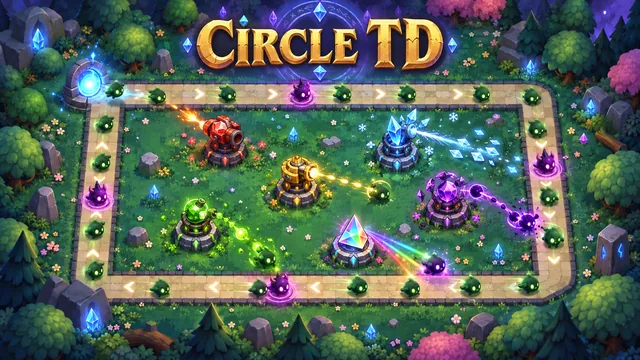
A practical first stop before defending the Circle: explore the native guide, choose your mode and return to a saved match.
October 8, 2026 · ZarocerRead guideUnderstand what a favorite saves, how Continue Playing works and why game progress stays with your browser.
October 8, 2026 · ZarocerRead guideUse the game’s supported devices, touch controls and screen orientation to make your next mobile session more comfortable.
October 8, 2026 · ZarocerRead guide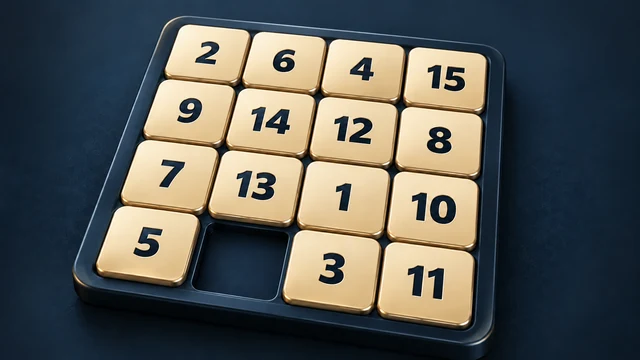
Plan the gap, protect solved rows and handle the final tile pairs in Zarocer’s 15 Puzzle. A practical sliding-puzzle strategy with a real board capture.
October 11, 2026 · ZarocerRead guideRead Circle TD’s closed circuit, surviving enemies and upcoming waves. Learn how to evaluate tower coverage, targeting and upgrade decisions.
October 11, 2026 · ZarocerRead guide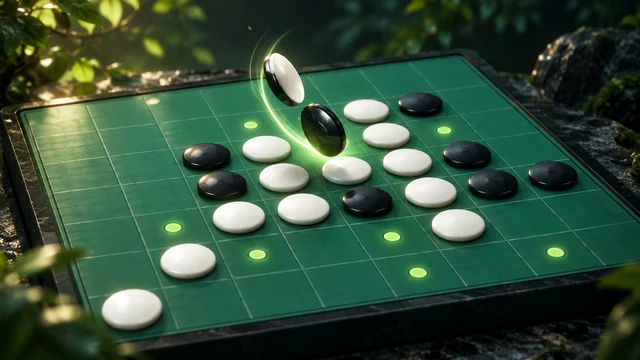
Look beyond the biggest flip in Reversi. Understand corners, mobility, frontier discs and endgame decisions with the playable Zarocer version.
October 11, 2026 · ZarocerRead guide
Practise Target Archery by separating wind correction from draw timing. Use the repeatable tournament, read both wind axes and compare your shots.
October 11, 2026 · ZarocerRead guide
Search the center letter, understand the seven-letter bonus and use the curated answer list in Zarocer Letter Hive. Includes practical examples.
October 12, 2026 · ZarocerRead guide
Learn how errors affect Typing Speed Race scores, read characters per minute correctly and compare practice attempts under consistent conditions.
October 12, 2026 · ZarocerRead guide
Find precise families in Word Quartets, check overlapping concepts and interpret near-miss feedback without wasting your four mistakes.
October 12, 2026 · ZarocerRead guide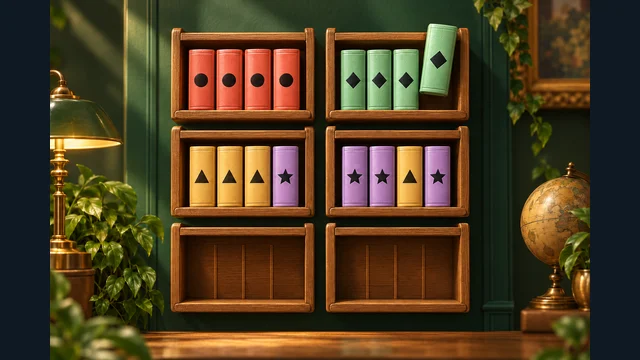
Plan legal book transfers in Shelf Sorting. Read exposed symbols, protect working space and use a concrete sequence to uncover a new empty shelf.
October 12, 2026 · ZarocerRead guide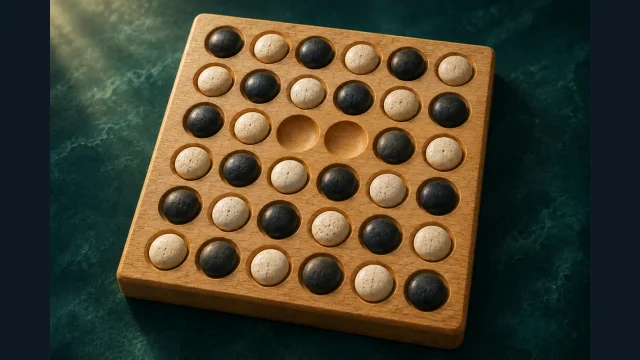
Learn the opening removals, straight capture chains and legal landing spaces in Zarocer’s 6×6 Kōnane. Plan for your next jump, not a capture score.
October 12, 2026 · ZarocerRead guide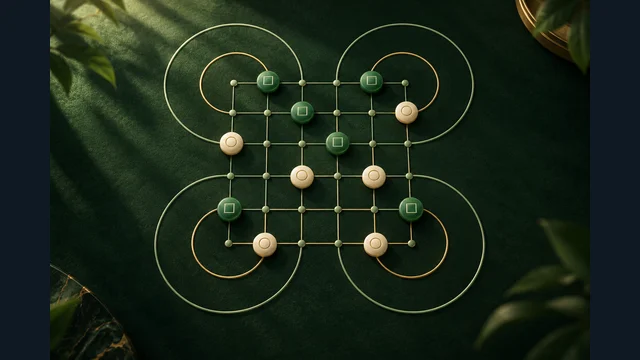
Trace legal loop captures in Zarocer Surakarta, identify blockers and compare landing positions. Includes Beta status and digital-rule boundaries.
October 12, 2026 · ZarocerRead guide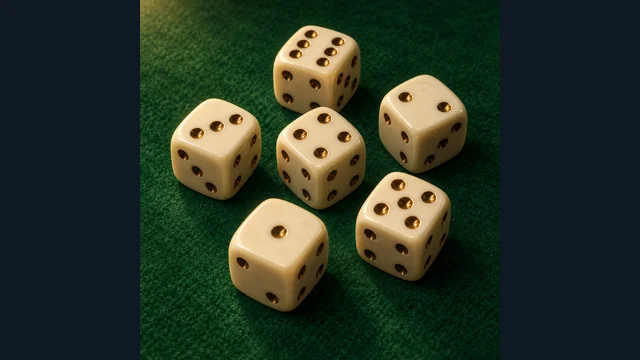
Understand banking, hot dice and one-die risk in Zarocer’s solo Farkle: ten turns, a 5,000-point goal and no straight or pair bonuses.
October 12, 2026 · ZarocerRead guide