Guides
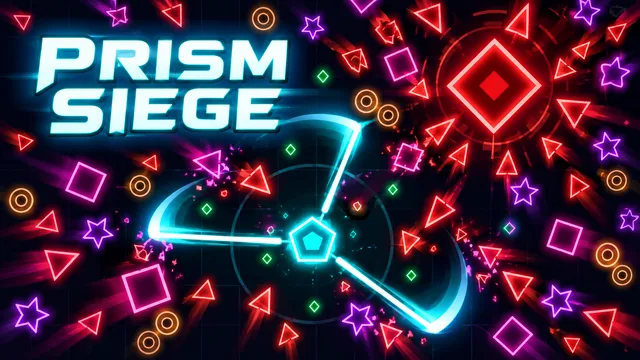
Prism Siege: movement first, upgrades next
Find your footing in Zarocer’s geometric survival game. Learn the controls, build useful upgrade combinations and resume your run.
October 8, 2026 · ZarocerRead guide
Look beyond the biggest flip in Reversi. Understand corners, mobility, frontier discs and endgame decisions with the playable Zarocer version.
By Zarocer · October 11, 2026 · 7 min read
Reversi creates an immediate reward every time a move flips several opposing discs. That reward can be misleading. The winner is determined by the final disc count, not by who leads after the first few turns. An early move that produces a dramatic swing may also open a corner or give the opponent several useful replies. Learning to inspect those replies is the first step beyond choosing the move with the largest visible capture.
Zarocer's published Reversi uses an eight-by-eight board, highlights legal moves and offers three computer levels or local two-player play on the same device. This guide explains how to think about a legal move, the value of corners and the idea of mobility. It does not promise that one positional rule solves every board. A good beginner rule is a question to investigate, not a command to follow when the actual position contradicts it.
A legal move places your disc on an empty square and brackets at least one straight line of opposing discs between it and another disc of your color. Straight lines include diagonals. Every bracketed line flips, so a single move can change the board in several directions. Before choosing a highlighted square, trace each applicable line rather than counting only the most obvious horizontal capture.
Black moves first. In local two-player mode, follow the active color displayed by the game. If a player has no legal move, that player's turn passes; the game ends when neither side can move. This may happen before the board is completely filled. These rules matter strategically because a move can affect not only the count but also whether the opponent has an available reply at all.
A corner has no square beyond it in the direction away from the board. Once occupied, it cannot be bracketed along a line extending past that boundary. That makes a captured corner stable in a way a central disc is not. The value is not simply that a corner flips several discs on the turn you take it. Its position provides a lasting anchor for later play.
Taking an available corner is usually worth close attention, but inspect the rest of the position as well. The existence of a corner move does not make every other detail irrelevant. If you are learning, compare the board before and after the move and identify which edge lines can now connect to your stable disc. This gives the corner's value a visible explanation instead of reducing it to a slogan you memorize.
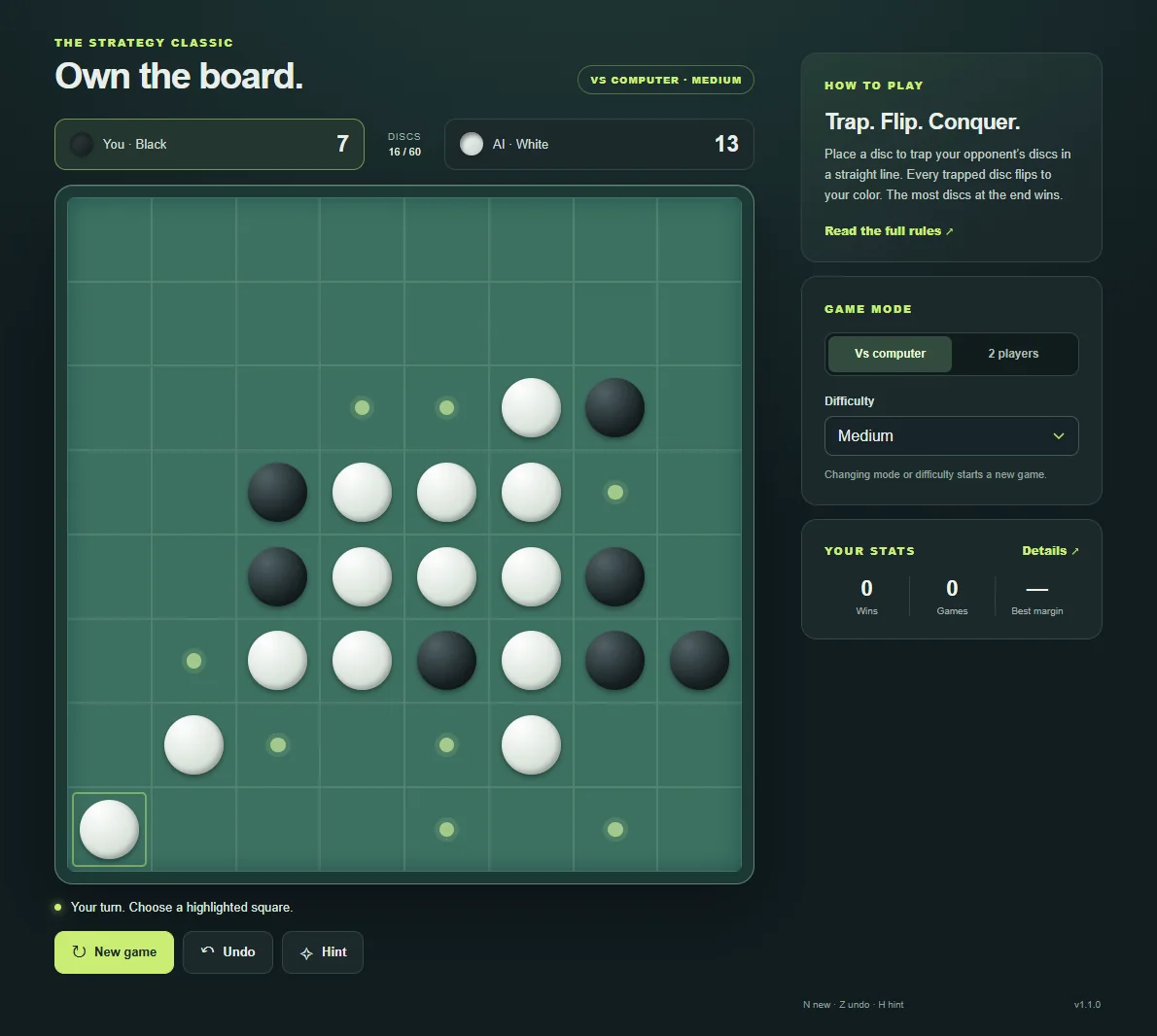
Moves near an unoccupied corner require care. A disc placed beside it can become part of a line that lets the opponent capture the corner on a later turn. The risk depends on the current surrounding discs and available replies, so proximity is a warning to inspect the board rather than proof that the move is always wrong. Check whether the corner becomes a legal move for the opponent immediately.
The diagonally adjacent square deserves the same deliberate inspection. A beginner may choose it because it flips several discs at once, then discover that the new line creates a route to the corner. Look beyond the capture count and ask which of your newly placed or flipped discs could become the far end of the opponent's next bracket. This is a practical way to connect positional advice with the actual legal-move rule.
Mobility describes the legal moves available to a player. When you have several reasonable choices and your opponent has only awkward ones, you can influence how the board develops. Merely counting highlighted squares is not enough: some choices may concede a corner, while others preserve a safer region. Begin with the simple count, then examine the quality of the most important options.
After considering a move, ask what new empty squares the opponent may be able to use. A large flip can spread your color into positions that create several new brackets for the other player. A smaller flip may leave fewer useful replies. This is why disc count is an incomplete early-game guide. You are changing the shape of the next turn as well as changing who currently owns the discs.
A frontier disc is adjacent to an empty square. Such discs can participate in future brackets because moves still have room to enter nearby. A broad band of your discs next to many empty squares may give your opponent several opportunities to play. Discs surrounded by occupied squares have a different relationship to future moves. This distinction can help explain why two positions with the same count feel very different.
Use frontier thinking as an observation, not as a universal instruction to avoid all contact with empty squares. Reversi necessarily develops through those boundaries. The useful question is whether a move exposes more of your position than it needs to while producing little lasting advantage. Compare that exposure with the corner situation and legal replies. Positional concepts become useful when considered together rather than applied as isolated numerical targets.
An edge can look protected because no move can enter from beyond the board, but an edge disc is not necessarily stable before the surrounding line is secured. An opponent may still bracket it along the edge or through another legal direction. Do not treat every edge square as a smaller corner. Ask how the disc could be reached by a future line and whether either end of that line is already secure.
During a practice game, notice the difference between an edge connected to your occupied corner and a loose edge segment next to an empty corner. The two positions may offer very different continuations. This comparison gives you a more useful picture than the rule “always play on the edge.” A safe-looking location can still create an important reply if you neglect the discs that make that reply legal.
Early in the game, future options and corner access deserve substantial attention. Near the end, fewer empty squares remain and the final count becomes more concrete. A move that captures many discs can then be valuable because there may be little opportunity left to reverse them. The point is not to ignore disc count until an exact move number; it is to understand why its meaning changes with the remaining space.
When only a small region is empty, count the plausible replies carefully. Can the opponent play after your move? Will a forced pass change who takes the last available square? You do not need a complex calculation to begin asking these questions. Slow down and inspect the small region rather than carrying over an early-game preference for the fewest immediate flips when the end position demands another choice.
Choose one of the three computer levels and keep it consistent while learning a particular idea. Changing the opponent level after every result makes it harder to compare your decisions. For a corner-focused session, review the first moment a corner became available and identify what opened it. For a mobility-focused session, notice the point at which one player lost most of their reasonable choices.
Local two-player mode is useful for discussing those decisions with another person at the same device. It is not an online matchmaking feature. Take turns according to the displayed active color and explain one possible reply before placing a disc. Discussion can help make the reasoning visible, but it does not require altering the game, saving a special replay or assuming a competitive service is connected to the portal.
Before selecting a square, ask what it flips, whether it opens a corner, which replies it creates and how much empty space remains. These questions combine the legal rule with the board's future shape. If two moves look similar, compare the reply that concerns you most. You are not trying to predict every remaining turn; you are trying to stop overlooking an immediate consequence that the board already makes visible.
Use the Reversi game page for current controls and supported play modes. Native progress is local when browser storage is available, so return through the same browser and domain to continue. The Board category offers other turn-based formats, while Four in a Row provides a different kind of threat planning. Choose another game when you want a different decision structure, and return to Reversi when you want to test whether your next move improves the whole position.
Find your footing in Zarocer’s geometric survival game. Learn the controls, build useful upgrade combinations and resume your run.
October 8, 2026 · ZarocerRead guide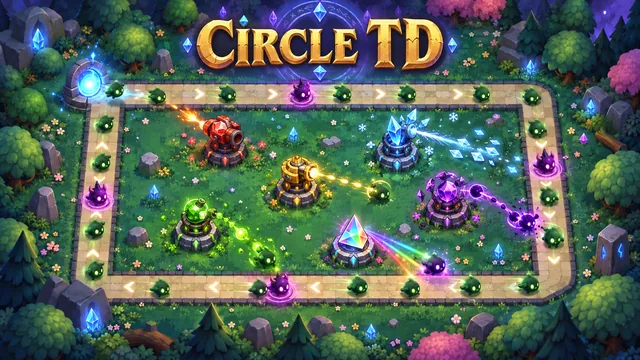
A practical first stop before defending the Circle: explore the native guide, choose your mode and return to a saved match.
October 8, 2026 · ZarocerRead guideUnderstand what a favorite saves, how Continue Playing works and why game progress stays with your browser.
October 8, 2026 · ZarocerRead guideUse the game’s supported devices, touch controls and screen orientation to make your next mobile session more comfortable.
October 8, 2026 · ZarocerRead guide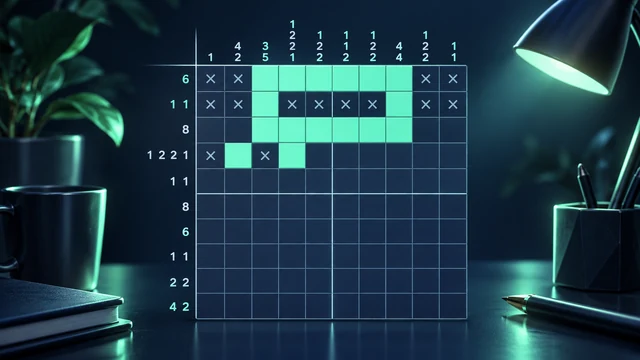
Compare Nonogram Atelier, Hitori and Futoshiki through worked deductions, real controls and different rules. Choose your next logic puzzle on Zarocer.
October 11, 2026 · ZarocerRead guide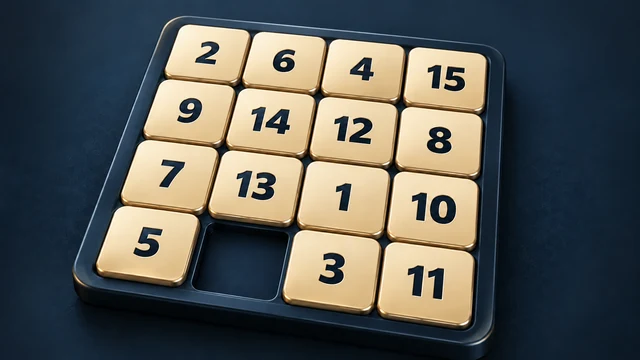
Plan the gap, protect solved rows and handle the final tile pairs in Zarocer’s 15 Puzzle. A practical sliding-puzzle strategy with a real board capture.
October 11, 2026 · ZarocerRead guideRead Circle TD’s closed circuit, surviving enemies and upcoming waves. Learn how to evaluate tower coverage, targeting and upgrade decisions.
October 11, 2026 · ZarocerRead guide
Practise Target Archery by separating wind correction from draw timing. Use the repeatable tournament, read both wind axes and compare your shots.
October 11, 2026 · ZarocerRead guide
Search the center letter, understand the seven-letter bonus and use the curated answer list in Zarocer Letter Hive. Includes practical examples.
October 12, 2026 · ZarocerRead guide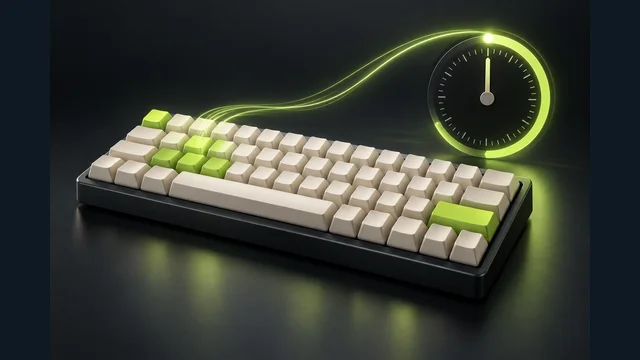
Learn how errors affect Typing Speed Race scores, read characters per minute correctly and compare practice attempts under consistent conditions.
October 12, 2026 · ZarocerRead guide
Find precise families in Word Quartets, check overlapping concepts and interpret near-miss feedback without wasting your four mistakes.
October 12, 2026 · ZarocerRead guide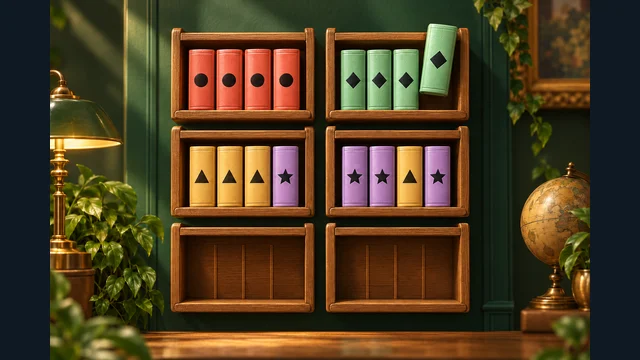
Plan legal book transfers in Shelf Sorting. Read exposed symbols, protect working space and use a concrete sequence to uncover a new empty shelf.
October 12, 2026 · ZarocerRead guide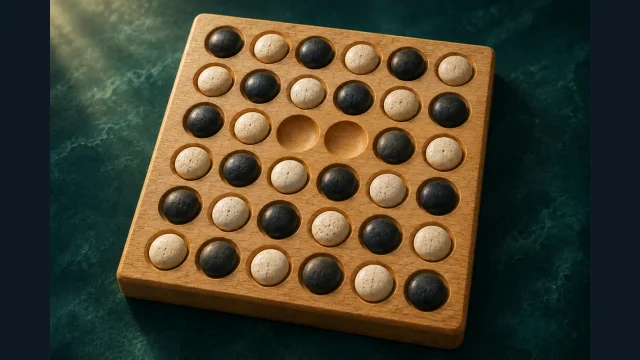
Learn the opening removals, straight capture chains and legal landing spaces in Zarocer’s 6×6 Kōnane. Plan for your next jump, not a capture score.
October 12, 2026 · ZarocerRead guide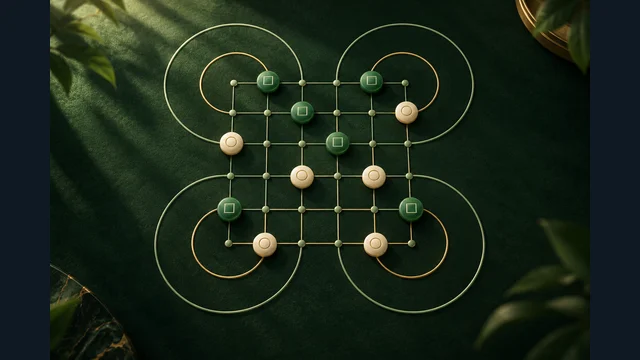
Trace legal loop captures in Zarocer Surakarta, identify blockers and compare landing positions. Includes Beta status and digital-rule boundaries.
October 12, 2026 · ZarocerRead guide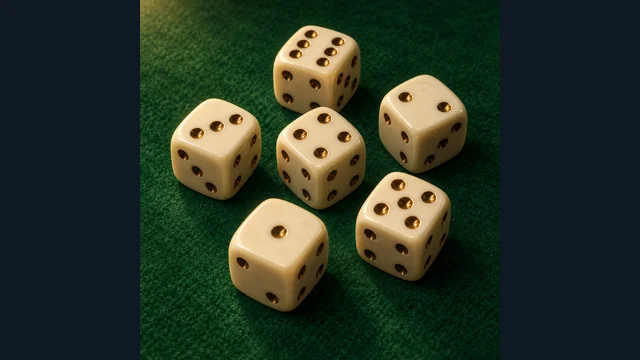
Understand banking, hot dice and one-die risk in Zarocer’s solo Farkle: ten turns, a 5,000-point goal and no straight or pair bonuses.
October 12, 2026 · ZarocerRead guide