
Guides
Prism Siege: movement first, upgrades next
Find your footing in Zarocer’s geometric survival game. Learn the controls, build useful upgrade combinations and resume your run.
October 8, 2026 · ZarocerRead guide
Search the center letter, understand the seven-letter bonus and use the curated answer list in Zarocer Letter Hive. Includes practical examples.
By Zarocer · October 12, 2026 · 6 min read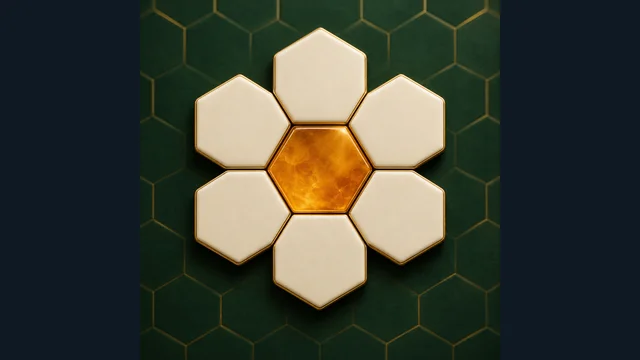
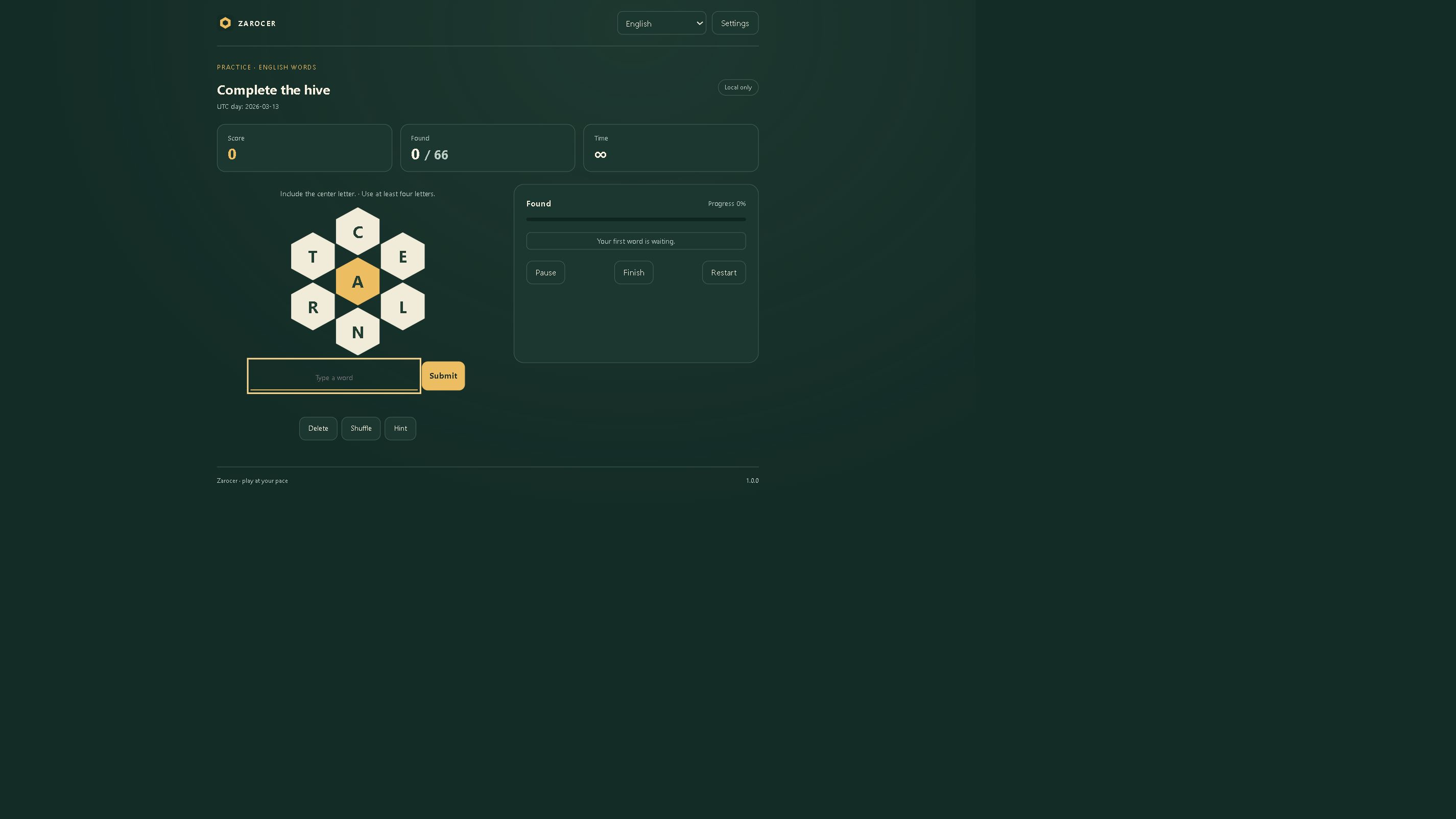
Letter Hive asks you to make words from seven letters while including the golden center letter in every answer. Letters may repeat, and answers need at least four letters. Those constraints define the search. Before typing, identify the center letter, the available vowels and any letters that commonly join together. A word you remember from another puzzle is useful only when every letter belongs to this hive. Rejected guesses do not become evidence that a spelling is wrong everywhere; this game uses its own selected answers.
Choose English vocabulary explicitly when practising English words. The language of the interface and the vocabulary being tested are separate choices. A translated menu does not turn an English answer list into another language. That distinction matters when a familiar word keeps being rejected. Check the vocabulary setting before spending time trying accents, endings or spellings that belong to a different list. On Zarocer, the initial release contains three hives per vocabulary, so a later daily date can repeat a puzzle rather than supply an entirely new set.
Treat the mandatory letter as an anchor. Look for words with it near the beginning, then in the middle, then near the end. This changes the shapes you imagine without changing the board. If your center letter is A, for example, do not search only for words beginning with A. Think about the role that A can play inside longer familiar words. The example describes a search habit, not a claim that any particular word belongs to the current hive's answer list.
Repeated letters are allowed, which is easy to forget when a letter appears on only one tile. A candidate can reuse a vowel or consonant several times. Conversely, an available letter does not have to appear in every answer. Only the center letter is compulsory. Separating those two rules opens more possibilities: short words can use a small subset, while longer words can return to the same letter. Keep the center requirement in view as you experiment so you do not repeatedly submit attractive but ineligible words.
Once you find a word, inspect related forms. A change of ending, a repeated letter or a familiar compound may reveal another candidate. Use this as a way to organize your thinking, not as a guarantee that the game accepts every dictionary form. Letter Hive is built around a curated list. A grammatically possible form can still be outside that list. Checking the revealed answers after finishing is more informative than arguing with the input field during a timed run.
Avoid repeating the same failed candidate with tiny changes that add no new idea. Move to a different starting letter or word length instead. You can keep a small mental inventory: short words checked, longer words explored, unusual letter combinations still untouched. This is particularly useful in untimed practice, where there is room to inspect what you overlooked. The purpose is to reduce aimless repetition. It is not a promise that a single searching order will complete every hive or improve vocabulary by a measurable amount.
A four-letter answer earns one point. Longer accepted words earn their length, and using all seven available letters adds seven points. Using all seven letters does not mean writing a word of exactly seven characters, because letters can repeat. A nine-character word that covers the entire letter set would earn sixteen points: nine for its length and seven for coverage. That calculation is a rules illustration; it does not announce an answer to a live daily puzzle.
The bonus makes a full-letter word attractive, but it should not consume the entire session. Several straightforward accepted words can contribute while you are still considering the longer candidate. Alternate between collecting words you can actually see and revisiting the unused letter combinations. If one consonant has not appeared in your answers, try placing it beside the available vowels. Stop when the exercise turns into arbitrary strings. A plausible sound is a starting point for recall, not a substitute for knowing a word.
Untimed practice is the better place to learn the controls, inspect the board and try a searching method. The daily challenge lasts three minutes. That time limit changes how you allocate attention, but it does not make the daily puzzle a comprehensive vocabulary exam. The same UTC date identifies the daily session, and the small initial content pool means familiarity may influence your result. Compare your own approaches with that limitation in mind instead of treating every higher score as evidence of a general improvement.
During a timed attempt, submit clear candidates first and avoid getting trapped on one nearly remembered word. During practice, take the opposite opportunity: slow down and explore why a word fits. Type and press Enter on a keyboard, or tap the letter tiles and Submit on a touchscreen. Check the typed word before sending it. A missed center letter or unintended extra character can make a correct idea fail. Input accuracy and word discovery are separate parts of the task, especially on a small screen.
The results let you see the hive's selected answer list. Use it to compare your search with the puzzle's actual scope. Look for one useful pattern: a repeated letter you neglected, an ending you never considered, or a longer word assembled from familiar parts. You do not need to memorize every answer to make that review worthwhile. Explaining why one overlooked word satisfies the seven-letter constraint can be a better learning exercise than immediately starting the same hive again and reproducing its list.
Hints and restored games remain local records rather than qualifying automatically for competitive submission. That makes them suitable for exploration. There is no reason to hide assistance from yourself when you are trying to understand a puzzle, but do distinguish an assisted completion from an unaided timed attempt. Records and active games use browser storage where available. Return using the same browser and Zarocer domain, and do not clear site data if you want to keep them. A favorite is a shortcut, not a backup.
For your next practice hive, choose one focus instead of chasing a perfect score: repeated letters, words with the center letter in different positions, or a review of longer answers. Finish the session, inspect the answer list and identify the search area you skipped. Then try daily play if you want the shorter format. This creates a specific feedback loop without promising that every attempt will improve. Letter Hive is a game, and its selected lists place a clear boundary around what any result can tell you.
If you prefer grouping meanings to building spellings, Word Quartets offers a different challenge. If you prefer arranging language that is already supplied, Sentence Building replaces letter searching with phrase order. These are useful alternatives because they change the decision you make, not because they represent harder and easier versions of one task. Start with the game whose rules you want to explore today, read its own controls, and keep personal results separate from portal rankings until a verified connection actually exists.
Find your footing in Zarocer’s geometric survival game. Learn the controls, build useful upgrade combinations and resume your run.
October 8, 2026 · ZarocerRead guide
A practical first stop before defending the Circle: explore the native guide, choose your mode and return to a saved match.
October 8, 2026 · ZarocerRead guideUnderstand what a favorite saves, how Continue Playing works and why game progress stays with your browser.
October 8, 2026 · ZarocerRead guideUse the game’s supported devices, touch controls and screen orientation to make your next mobile session more comfortable.
October 8, 2026 · ZarocerRead guide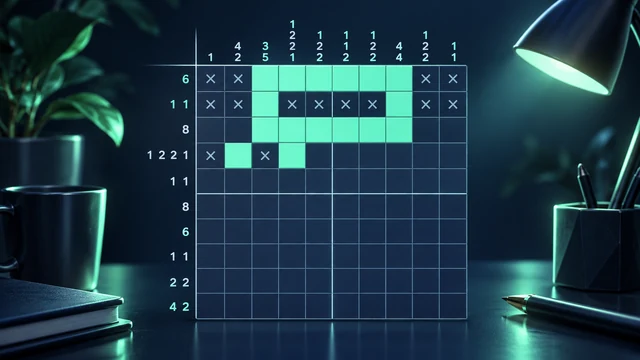
Compare Nonogram Atelier, Hitori and Futoshiki through worked deductions, real controls and different rules. Choose your next logic puzzle on Zarocer.
October 11, 2026 · ZarocerRead guide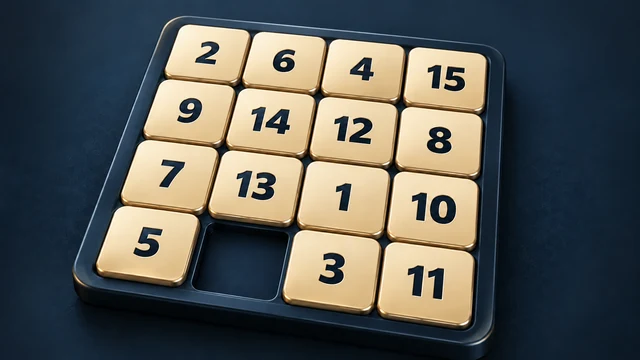
Plan the gap, protect solved rows and handle the final tile pairs in Zarocer’s 15 Puzzle. A practical sliding-puzzle strategy with a real board capture.
October 11, 2026 · ZarocerRead guideRead Circle TD’s closed circuit, surviving enemies and upcoming waves. Learn how to evaluate tower coverage, targeting and upgrade decisions.
October 11, 2026 · ZarocerRead guide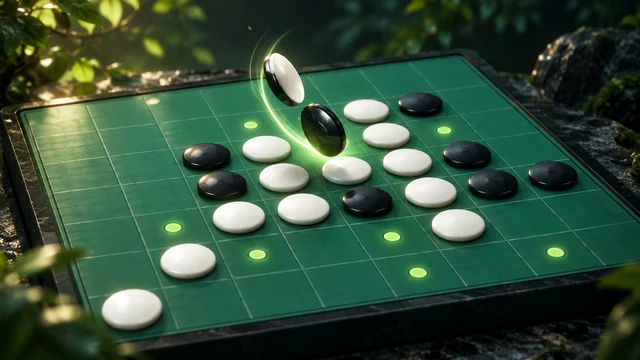
Look beyond the biggest flip in Reversi. Understand corners, mobility, frontier discs and endgame decisions with the playable Zarocer version.
October 11, 2026 · ZarocerRead guide
Practise Target Archery by separating wind correction from draw timing. Use the repeatable tournament, read both wind axes and compare your shots.
October 11, 2026 · ZarocerRead guide
Learn how errors affect Typing Speed Race scores, read characters per minute correctly and compare practice attempts under consistent conditions.
October 12, 2026 · ZarocerRead guide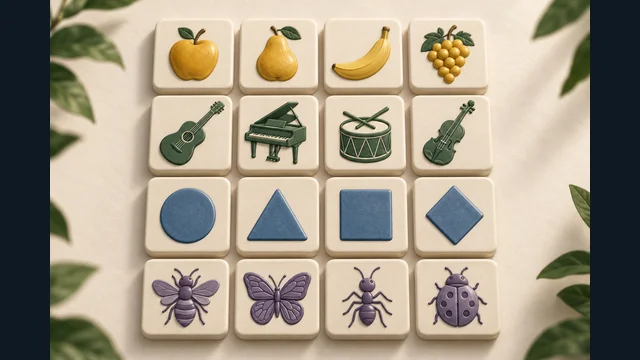
Find precise families in Word Quartets, check overlapping concepts and interpret near-miss feedback without wasting your four mistakes.
October 12, 2026 · ZarocerRead guide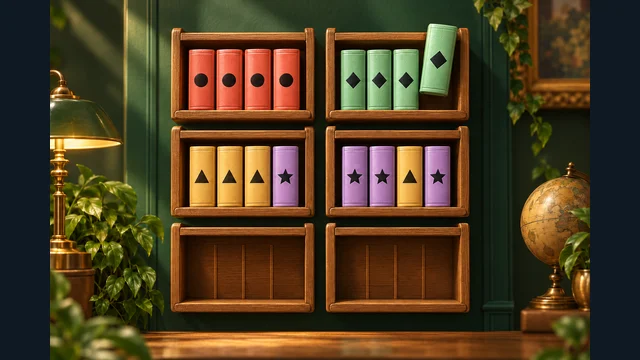
Plan legal book transfers in Shelf Sorting. Read exposed symbols, protect working space and use a concrete sequence to uncover a new empty shelf.
October 12, 2026 · ZarocerRead guide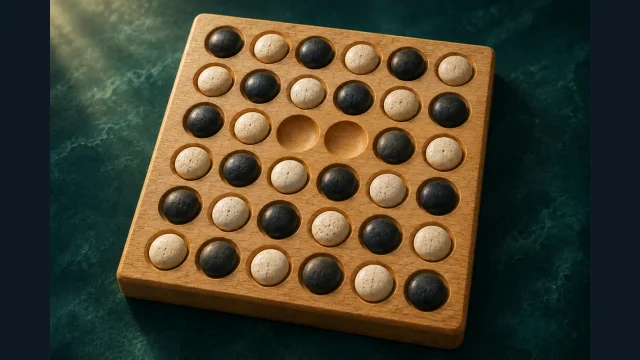
Learn the opening removals, straight capture chains and legal landing spaces in Zarocer’s 6×6 Kōnane. Plan for your next jump, not a capture score.
October 12, 2026 · ZarocerRead guide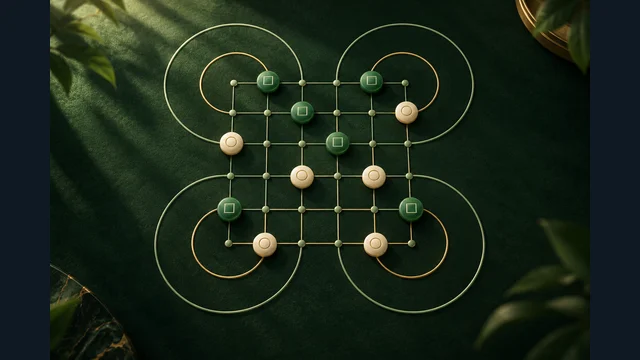
Trace legal loop captures in Zarocer Surakarta, identify blockers and compare landing positions. Includes Beta status and digital-rule boundaries.
October 12, 2026 · ZarocerRead guide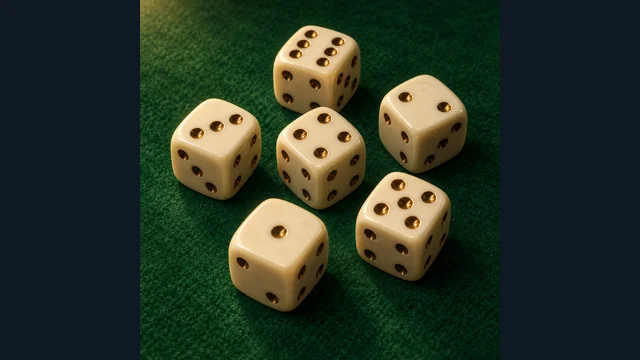
Understand banking, hot dice and one-die risk in Zarocer’s solo Farkle: ten turns, a 5,000-point goal and no straight or pair bonuses.
October 12, 2026 · ZarocerRead guide