Guides
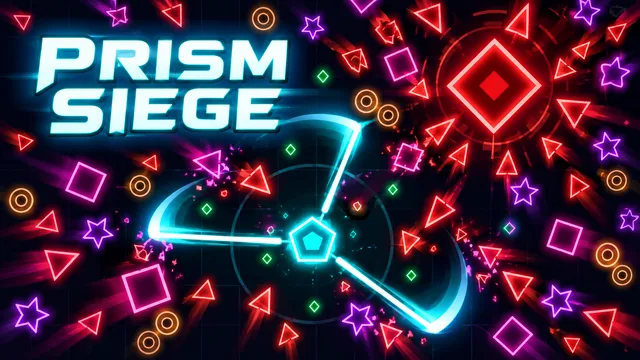
Prism Siege: movement first, upgrades next
Find your footing in Zarocer’s geometric survival game. Learn the controls, build useful upgrade combinations and resume your run.
October 8, 2026 · ZarocerRead guide
Trace legal loop captures in Zarocer Surakarta, identify blockers and compare landing positions. Includes Beta status and digital-rule boundaries.
By Zarocer · October 12, 2026 · 6 min read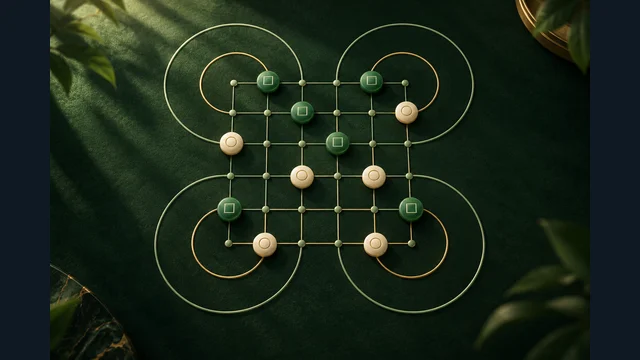
Surakarta places twelve stones per player on a six-by-six grid, with corner loops extending the movement tracks. Ordinary moves take one step to an empty neighboring point, including diagonals. Captures are different: a stone travels along a clear row or column, passes through at least one corner loop and reaches the first opposing stone on its route. Those two move types should not be blended into a rule such as move anywhere along a line. A long straight approach without a loop is not a valid capture.
Zarocer's published edition is Beta, version 1.0.0-rc.1. It includes three computer levels, two-player play on one device and an interactive capture lesson. Use that lesson before evaluating a tactical position from a screenshot. The board's unusual geometry is easier to understand when the game highlights a complete route. This guide explains how to read those routes and compare decisions. It does not announce a final stable version, remote multiplayer or changes to the digital rules that are not present in the approved build.
Start at the moving stone and follow its selected row or column. At a corner loop, continue along the drawn track to the point where the loop returns to the grid. Keep following the resulting line until the first stone blocks the route. To capture, that stone must be an opponent and you must already have passed through a loop. You cannot jump an intervening stone. You also cannot turn freely at a crossing simply because a perpendicular line offers a convenient approach.
This is a path-reading task rather than a distance test. A target that looks close may not have a valid loop route, while a distant target may be reachable along an unobstructed track. Before clicking, identify the loop, the return line and every occupied point in between. A friendly stone can block an otherwise promising capture. So can an opposing stone encountered before the target you intended to take. Read the first obstruction, not the stone that happens to look most valuable.
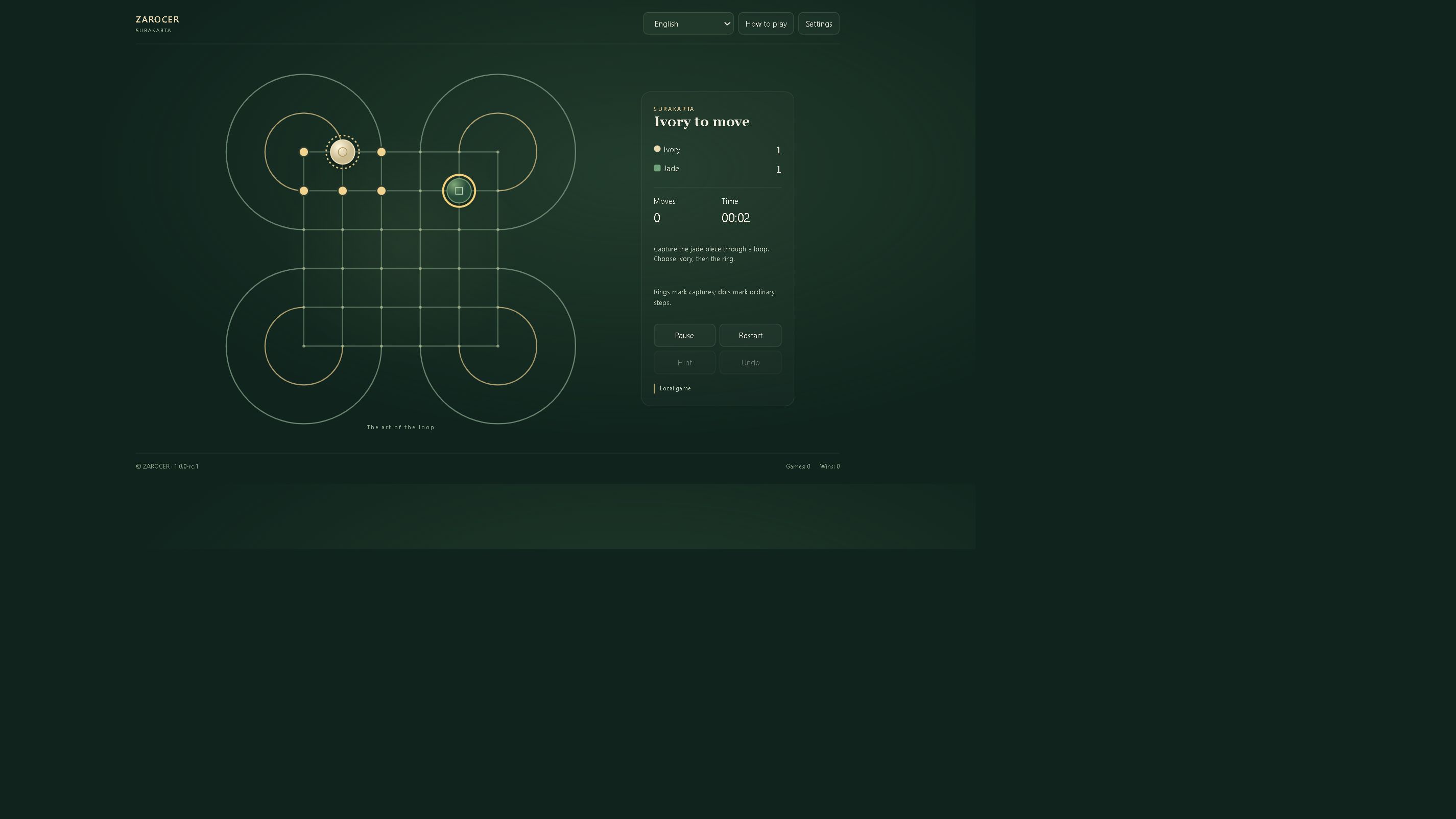
An ordinary step may open a capture track for a later turn. Moving a stone off one line can remove an obstruction, allowing another stone to pass through a loop. That is a reason to consider quiet moves, but it also creates risk: the newly clear route may help the opponent before it helps you. Check whose turn comes next and which stones can use the opening. A route is shared board geometry, not private infrastructure belonging to the player who cleared it.
For an invented planning example, imagine one of your stones blocking a line that would otherwise carry another of your stones into a corner loop. Stepping the blocker aside could prepare a capture. Before making that step, trace the same newly opened line from the opponent's nearby stones. If their reply captures the stone you were trying to activate, the preparation has backfired. The illustration does not specify a live puzzle solution. It shows why route creation and route exposure must be assessed together.
After a capture, the moving stone occupies the captured stone's point. The result can leave it on another accessible track, surrounded by friendly blockers or exposed to a reply. Evaluate that landing position before committing. Taking one stone while immediately losing your own may or may not be acceptable, depending on the rest of the board. Counting the immediate capture alone misses the change in access. Follow at least one plausible opponent route from the resulting position whenever the board is manageable enough to do so.
In this edition, capturing is optional. You are not required to take the first legal capture that appears. An ordinary move can preserve a useful blocker or improve a position instead. This is particularly important if you come from games with compulsory captures. Do not bring that assumption to Surakarta. Compare your options against the actual highlighted legal moves and the in-game rules. A strategic recommendation only makes sense after the movement contract is understood; otherwise you may be optimizing a move the game does not allow.
When an expected capture is unavailable, check three common causes: an occupied point along the path, no loop in the route, or an imagined turn at a crossing. Inspect them one at a time instead of repeatedly selecting the destination. If a friendly blocker prevents the capture, ask whether moving it would expose another stone. If the route lacks a loop, moving closer in a straight line will not fix that requirement by itself. If the problem is a turn, follow the drawn continuation rather than inventing a junction.
The interactive lesson and marked destinations give you feedback about legal movement, but do not replace strategic thought. A highlighted capture means legal, not safe or best. Treat the marks as a rule check. Then decide whether the route and landing position help your plan. This distinction lets the interface teach geometry without being mistaken for an automatic tactical adviser. You can use a hint during practice when needed, while keeping the assisted result distinct from an unaided attempt.
Capturing all opposing stones wins, but this implementation also has explicit digital adjudication for repeated positions, turn limits and blocked games, using remaining material. Read those details in the game before evaluating a late position. Do not invent a numeric repetition limit from another implementation. A traditional rules description can explain the loop mechanic while omitting the closure rules that a digital edition needs. The current native rules are the reference for how this specific match will end.
Undo, hints and saved restoration are available for local play. They let you examine an alternative route or continue later without treating that session as a pristine competitive attempt. Return using the same browser and domain with storage allowed. A saved match is not automatically synchronized to another device, and passing a device to another person is not online matchmaking. Those boundaries matter when choosing a session. Use the local two-player mode if you want to compare route ideas together on one screen.
During your first match, focus on describing one complete capture route correctly. Say where it enters the loop, where it returns to the grid and which stone is the first obstruction. Then choose an ordinary move for a stated reason, such as keeping a blocker or preparing access. After the match, revisit a capture you missed or a reply you underestimated. That concrete review can improve your understanding of the board without making a promise about wins against every computer difficulty.
Kōnane offers a useful contrast: its captures jump opposing stones in straight sequences and the player without a jump loses. Surakarta's optional loop captures and adjacent steps create a different decision space. Play each with its own rules in mind. For Surakarta, tracing the route comes first, then checking the reply, then considering the broader position. The unusual board is not decoration; it is the system that makes an apparently quiet opening or a distant stone relevant to the next capture.
Open Surakarta and its current controls
Find your footing in Zarocer’s geometric survival game. Learn the controls, build useful upgrade combinations and resume your run.
October 8, 2026 · ZarocerRead guide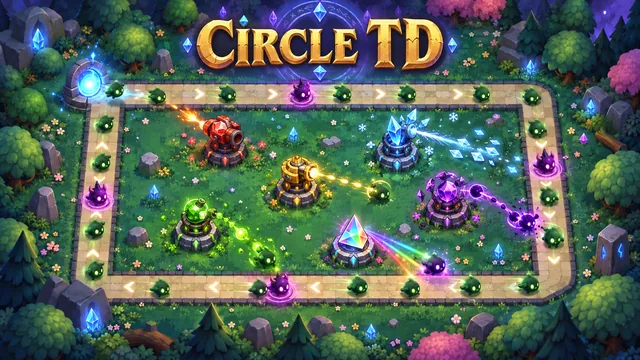
A practical first stop before defending the Circle: explore the native guide, choose your mode and return to a saved match.
October 8, 2026 · ZarocerRead guideUnderstand what a favorite saves, how Continue Playing works and why game progress stays with your browser.
October 8, 2026 · ZarocerRead guideUse the game’s supported devices, touch controls and screen orientation to make your next mobile session more comfortable.
October 8, 2026 · ZarocerRead guide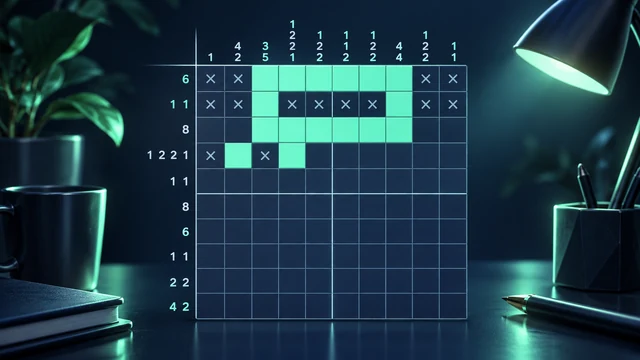
Compare Nonogram Atelier, Hitori and Futoshiki through worked deductions, real controls and different rules. Choose your next logic puzzle on Zarocer.
October 11, 2026 · ZarocerRead guide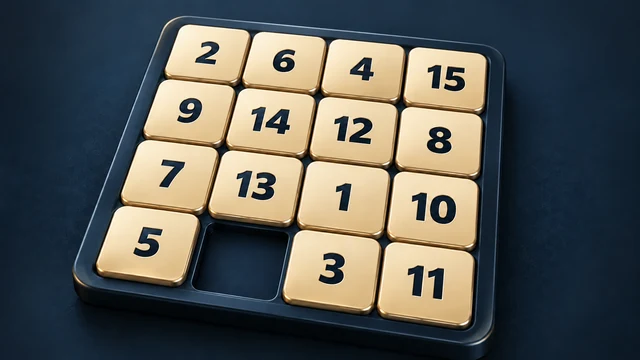
Plan the gap, protect solved rows and handle the final tile pairs in Zarocer’s 15 Puzzle. A practical sliding-puzzle strategy with a real board capture.
October 11, 2026 · ZarocerRead guideRead Circle TD’s closed circuit, surviving enemies and upcoming waves. Learn how to evaluate tower coverage, targeting and upgrade decisions.
October 11, 2026 · ZarocerRead guide
Look beyond the biggest flip in Reversi. Understand corners, mobility, frontier discs and endgame decisions with the playable Zarocer version.
October 11, 2026 · ZarocerRead guide
Practise Target Archery by separating wind correction from draw timing. Use the repeatable tournament, read both wind axes and compare your shots.
October 11, 2026 · ZarocerRead guide
Search the center letter, understand the seven-letter bonus and use the curated answer list in Zarocer Letter Hive. Includes practical examples.
October 12, 2026 · ZarocerRead guide
Learn how errors affect Typing Speed Race scores, read characters per minute correctly and compare practice attempts under consistent conditions.
October 12, 2026 · ZarocerRead guide
Find precise families in Word Quartets, check overlapping concepts and interpret near-miss feedback without wasting your four mistakes.
October 12, 2026 · ZarocerRead guide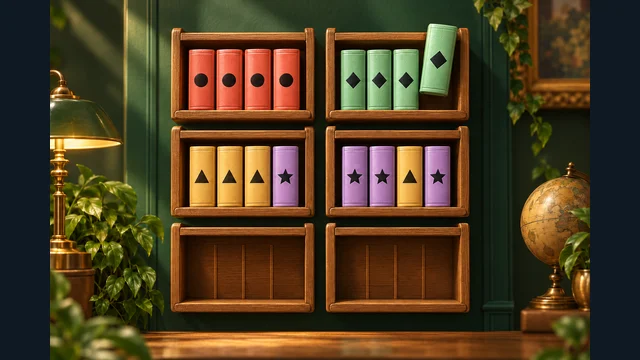
Plan legal book transfers in Shelf Sorting. Read exposed symbols, protect working space and use a concrete sequence to uncover a new empty shelf.
October 12, 2026 · ZarocerRead guide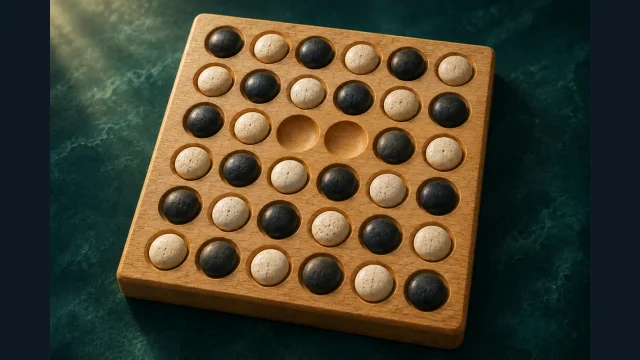
Learn the opening removals, straight capture chains and legal landing spaces in Zarocer’s 6×6 Kōnane. Plan for your next jump, not a capture score.
October 12, 2026 · ZarocerRead guide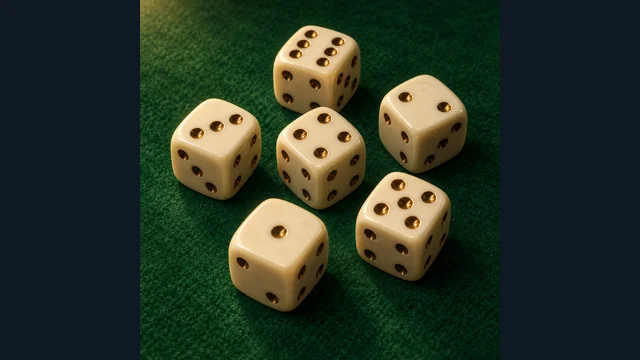
Understand banking, hot dice and one-die risk in Zarocer’s solo Farkle: ten turns, a 5,000-point goal and no straight or pair bonuses.
October 12, 2026 · ZarocerRead guide