
Guides
Prism Siege: movement first, upgrades next
Find your footing in Zarocer’s geometric survival game. Learn the controls, build useful upgrade combinations and resume your run.
October 8, 2026 · ZarocerRead guide
Understand banking, hot dice and one-die risk in Zarocer’s solo Farkle: ten turns, a 5,000-point goal and no straight or pair bonuses.
By Zarocer · October 12, 2026 · 6 min read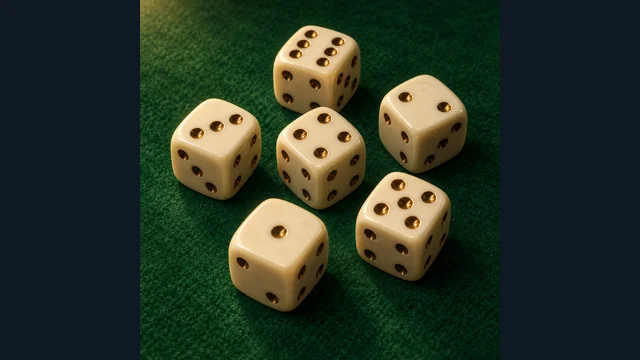
Farkle has many published scoring conventions. Zarocer's edition is a solo ten-turn game with a 5,000-point goal, no entry minimum and no bonuses for straights or pairs. A strategy copied from a multiplayer race to 10,000 points may therefore be inappropriate. Read the scoring help inside this game before rolling. The main decision remains familiar: set aside scoring dice, then bank the turn total or roll the remaining dice. But the goal, available turns and combination values define what that decision means here.
Earlier banked points remain safe. A non-scoring roll loses only the unbanked total for the current turn. Keeping dice is not the same as banking the turn: the kept score is still exposed if you reroll and then fail. That distinction is the first thing to understand. An impressive total beside the active turn can disappear, while a smaller total already banked contributes securely toward the goal. Do not evaluate a screenshot of one lucky roll as if it were the completed score of the game.
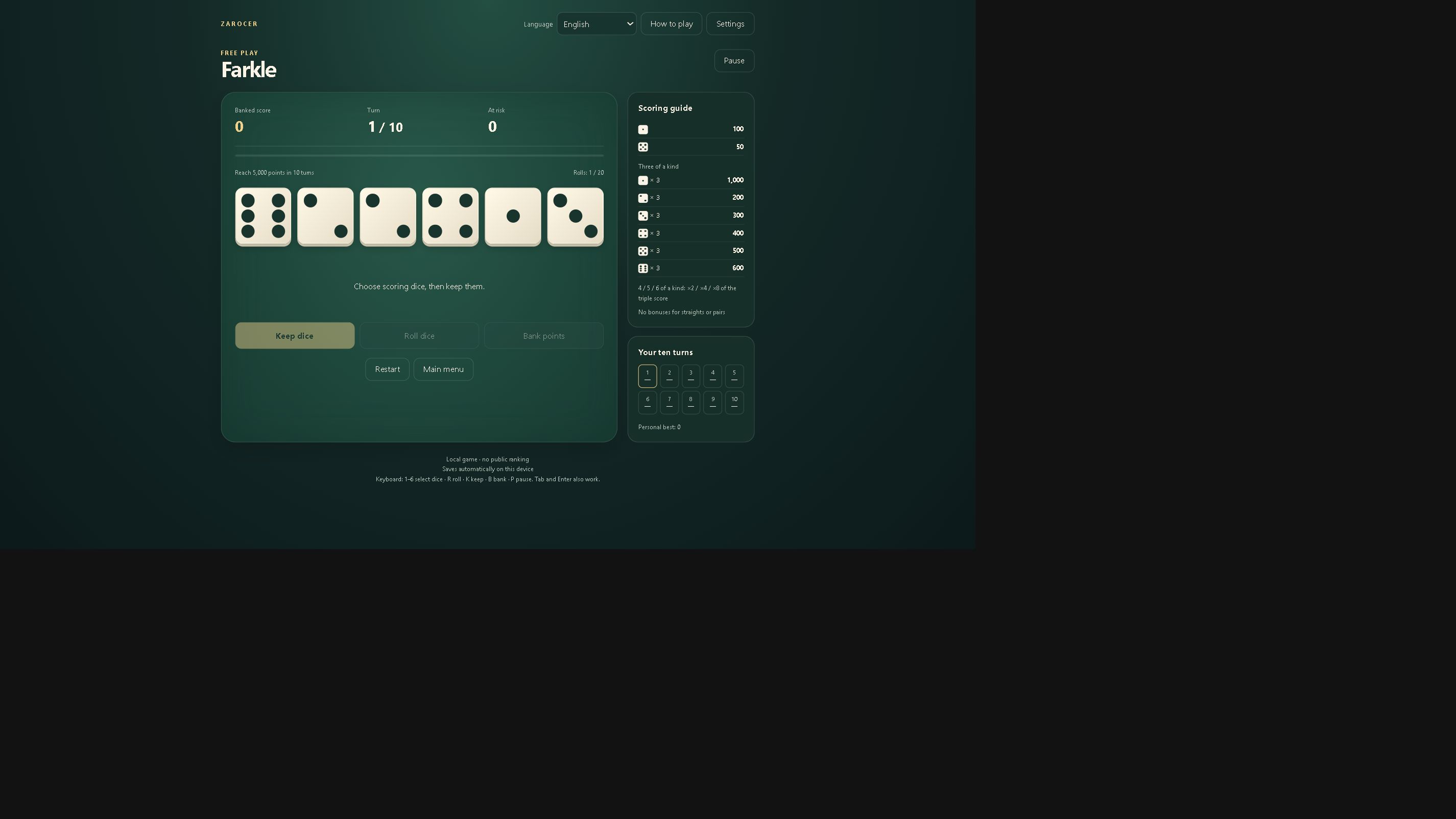
A single one scores 100 and a single five scores 50. Groups of at least three matching dice have their own values. The native help is the reference for those values and valid combinations. Select scoring dice and use Keep dice, then decide whether to bank or continue. You cannot build a triple by combining matching singles from unrelated rolls unless the implementation explicitly allows it; do not infer a scoring rule from the appearance of dice kept earlier in the turn.
This version does not award a straight or a collection of pairs merely because another Farkle rulebook does. A roll containing one through six has scoring singles, but its visual sequence is not a special straight bonus here. Likewise, pairs of twos, threes or fours are not automatically valuable. The practical habit is to select a valid scoring subset under the current rules. If you are uncertain, use the game's scoring explanation rather than treating a rejected selection as evidence that the browser is broken.
With one ordinary fair die left, a one or five provides a scoring single. Four of the six faces do not, so a non-scoring result has probability four-sixths, or two-thirds. That is a conditional illustration for a single die under the stated rules, not a prediction of the next generated result. Suppose 400 points are still unbanked. Rerolling that last die puts those 400 points at risk to continue the turn. Banking protects them; it does not prevent you from starting the next turn.
Probability alone does not choose the best action in every game state. A cautious bank may be sensible when you are ahead of the pace you need, while a late shortfall may make risk necessary. The point of the calculation is to make the risk visible, not to prescribe a magic stop number. Rolling again because the last attempt was unlucky is not a probability argument. A previous outcome does not guarantee that the next roll will compensate, and a sequence of safe rolls does not remove the next roll's risk.
The goal across ten turns implies a simple planning reference of 500 banked points per turn on average. It is not a required score for each individual turn. A strong turn can compensate for a weaker one, and repeated zero turns make the remaining task harder. After banking, compare the remaining points with the remaining turns. If you need 2,000 points across four turns, the average reference is still 500. If you need the same amount in one turn, the required risk profile is quite different.
Use that reference to ask a better question than should I always bank at 500? You might bank below it when the remaining dice are unfavorable and several turns remain. You might continue above it when the current opportunity is strong or the late-game deficit requires more. There is no guaranteed route to 5,000 because rolls can fail. A useful strategy explains why a particular choice fits the score, remaining dice and remaining turns; it does not promise victory from one fixed threshold.
When all six dice score, hot dice let you roll all six again while keeping the unbanked turn total. More dice can create more scoring possibilities than one remaining die, but the previous turn points are still exposed if the next roll is non-scoring. Do not confuse refreshing the dice with banking. The display's accumulated turn score remains part of the same risk decision. Before accepting the fresh roll, compare that amount with what you actually need and how many turns remain.
Selecting which scoring dice to keep also matters. Keeping every scoring option may leave fewer dice for the next roll, while keeping a smaller subset can leave more dice available but fewer immediate points. The native combination rules limit your choices, so first confirm the subset is valid. Then compare the resulting dice count and turn score. This guide does not supply an exact optimal policy for every combination. It gives you the variables to inspect so the decision is deliberate rather than driven only by the largest visible subtotal.
After a session, inspect one banking decision and one failed reroll. What was the unbanked total, how many dice remained and how much time in the ten-turn budget was left? Record those facts if you want to compare your choices later. Looking only at your biggest successful turn creates a misleading picture of a risky approach. A strategy can occasionally produce spectacular points while losing too many other turns. Consider complete games, including zero turns, before claiming that a banking habit consistently helps you.
Free play starts a fresh sequence. The daily challenge uses the same generator for the UTC day, and each turn has a twenty-roll limit. These are this edition's constraints, not rules to assume in other games. Do not advertise a daily result as a verified public ranking without actual confirmation. Local scores, daily game behavior and portal competitive systems are different layers. The game page and native rules tell you what the current session supports; an article should not add a competitive promise that the release does not make.
On a keyboard, number keys one through six select dice, R rolls, K keeps, B banks and P pauses. Mouse and touch are supported too. Check the selected dice before keeping them, especially on a small screen. Pausing and returning can support a relaxed game, and local saving uses the same browser and domain where storage is available. Do not clear site data if you need that saved session. A portal favorite can reopen the game but is not a backup of its current dice.
For your next game, practise explaining the bank-or-roll choice aloud or mentally: current turn points, dice remaining, points needed and turns left. You will still sometimes choose well and roll badly. That is a normal consequence of uncertainty rather than proof that the reasoning was useless. If you prefer a board where every consequence follows from a deterministic move, Kōnane offers a contrasting strategy task. In Farkle, protect what is banked, recognize what remains at risk and judge your method across complete sessions rather than one memorable throw.
Open Farkle and its current controls
Try a deterministic strategy game
Read the research on optimal Farkle play under specified rules
Find your footing in Zarocer’s geometric survival game. Learn the controls, build useful upgrade combinations and resume your run.
October 8, 2026 · ZarocerRead guide
A practical first stop before defending the Circle: explore the native guide, choose your mode and return to a saved match.
October 8, 2026 · ZarocerRead guideUnderstand what a favorite saves, how Continue Playing works and why game progress stays with your browser.
October 8, 2026 · ZarocerRead guideUse the game’s supported devices, touch controls and screen orientation to make your next mobile session more comfortable.
October 8, 2026 · ZarocerRead guide
Compare Nonogram Atelier, Hitori and Futoshiki through worked deductions, real controls and different rules. Choose your next logic puzzle on Zarocer.
October 11, 2026 · ZarocerRead guide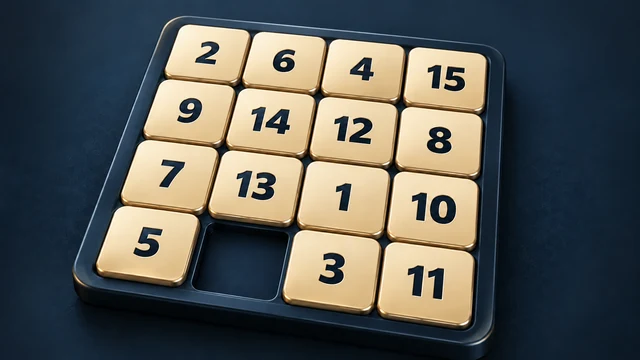
Plan the gap, protect solved rows and handle the final tile pairs in Zarocer’s 15 Puzzle. A practical sliding-puzzle strategy with a real board capture.
October 11, 2026 · ZarocerRead guideRead Circle TD’s closed circuit, surviving enemies and upcoming waves. Learn how to evaluate tower coverage, targeting and upgrade decisions.
October 11, 2026 · ZarocerRead guide
Look beyond the biggest flip in Reversi. Understand corners, mobility, frontier discs and endgame decisions with the playable Zarocer version.
October 11, 2026 · ZarocerRead guide
Practise Target Archery by separating wind correction from draw timing. Use the repeatable tournament, read both wind axes and compare your shots.
October 11, 2026 · ZarocerRead guide
Search the center letter, understand the seven-letter bonus and use the curated answer list in Zarocer Letter Hive. Includes practical examples.
October 12, 2026 · ZarocerRead guide
Learn how errors affect Typing Speed Race scores, read characters per minute correctly and compare practice attempts under consistent conditions.
October 12, 2026 · ZarocerRead guide
Find precise families in Word Quartets, check overlapping concepts and interpret near-miss feedback without wasting your four mistakes.
October 12, 2026 · ZarocerRead guide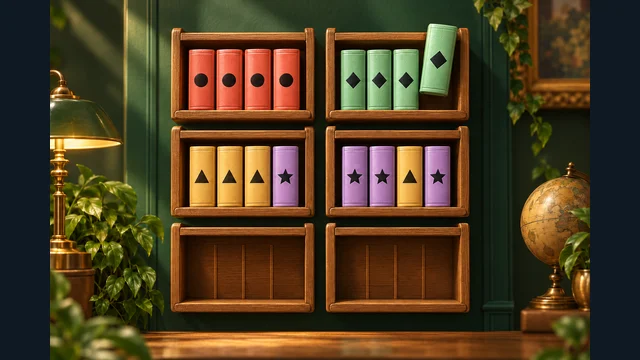
Plan legal book transfers in Shelf Sorting. Read exposed symbols, protect working space and use a concrete sequence to uncover a new empty shelf.
October 12, 2026 · ZarocerRead guide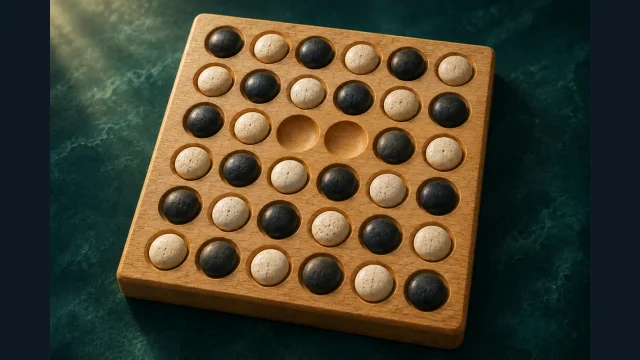
Learn the opening removals, straight capture chains and legal landing spaces in Zarocer’s 6×6 Kōnane. Plan for your next jump, not a capture score.
October 12, 2026 · ZarocerRead guide
Trace legal loop captures in Zarocer Surakarta, identify blockers and compare landing positions. Includes Beta status and digital-rule boundaries.
October 12, 2026 · ZarocerRead guide