
Guides
Prism Siege: movement first, upgrades next
Find your footing in Zarocer’s geometric survival game. Learn the controls, build useful upgrade combinations and resume your run.
October 8, 2026 · ZarocerRead guide
Plan legal book transfers in Shelf Sorting. Read exposed symbols, protect working space and use a concrete sequence to uncover a new empty shelf.
By Zarocer · October 12, 2026 · 7 min read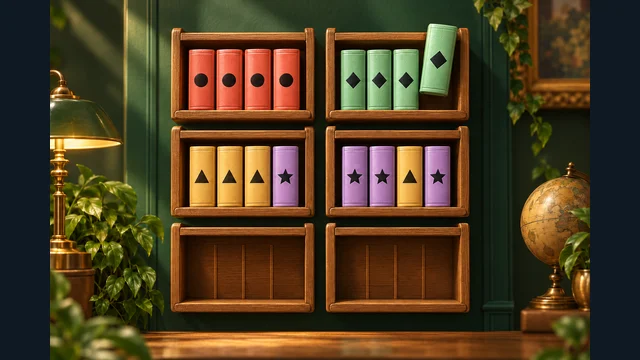
Shelf Sorting looks like a small library to organize, but its legal moves depend on the rightmost book of each shelf. Select a shelf to pick that book, then choose a shelf that is empty or ends with the same symbol. The destination also needs room. Each shelf holds four books. A matching book buried on the left cannot be moved directly until the books to its right have been shifted. Reading which symbols are actually exposed is therefore more useful than counting an attractive group hidden inside the shelf.
The goal is to leave every occupied shelf full of four identical symbols. Spare shelves may remain empty. A shelf with two matching books is useful progress, but it is not yet a finished shelf. Conversely, filling a shelf with a mixed sequence can make access worse even if it briefly opens another space. Look at the resulting rightmost symbols before committing. The game is about creating legal access to the books you need, not simply moving as many books as possible whenever a destination lights up.
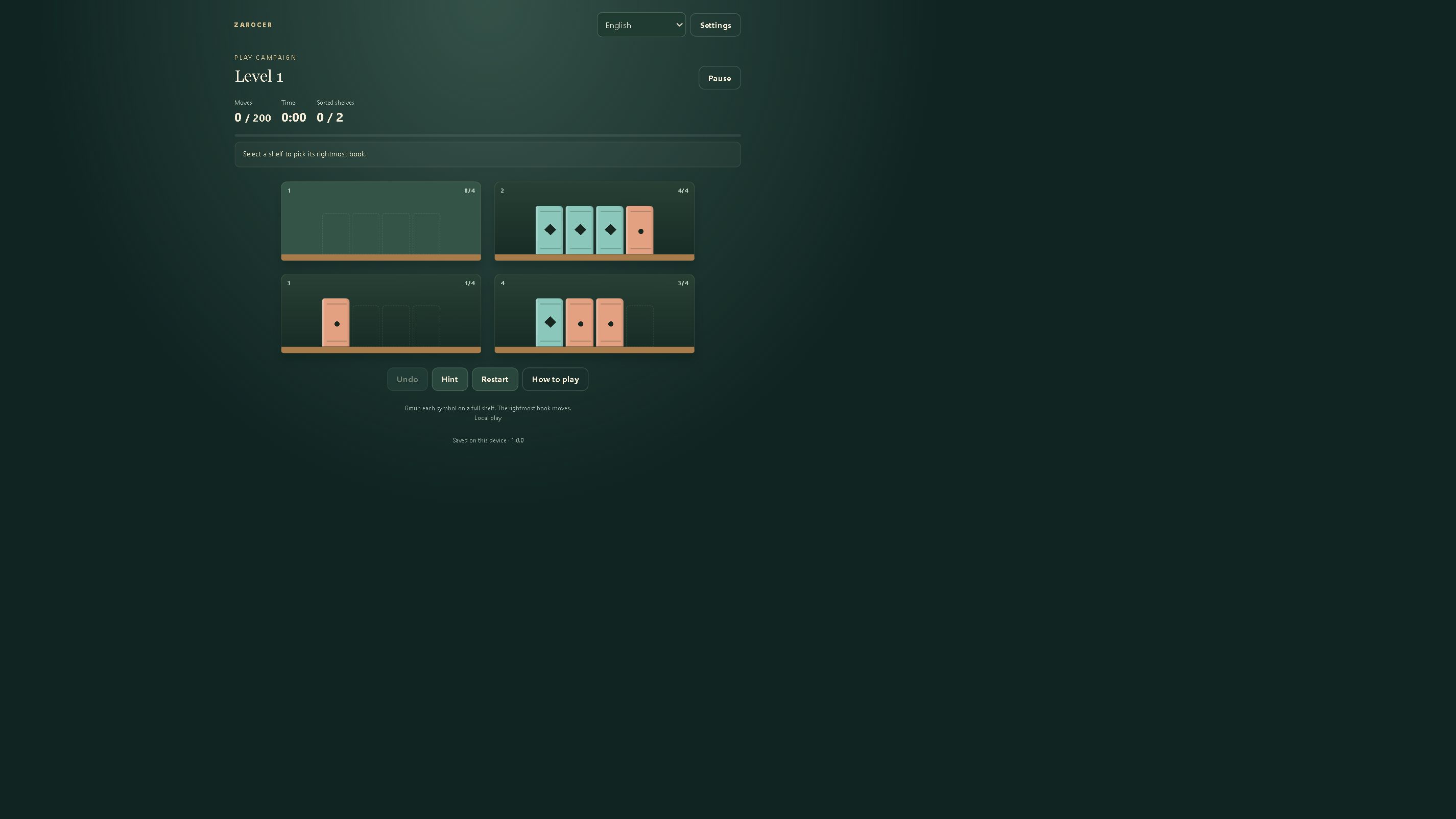
An empty shelf accepts any exposed book, which makes it flexible. Once you place a book there, later moves into that shelf must match its rightmost symbol unless it becomes empty again. That is why using your last empty shelf deserves attention. The move may be correct, but it converts a general-purpose space into a specific destination. Ask what new access you receive in exchange. If it merely transfers one obstructing book without revealing anything useful, you may have made the board less flexible for no meaningful gain.
Do not interpret this as a rule to keep an empty shelf forever. Some solutions need the spare space occupied before it can be recovered elsewhere. The useful question is whether the move advances a plan. Perhaps placing one symbol in the empty shelf uncovers two matching books on another shelf, allowing you to empty that shelf next. In that case you are exchanging one buffer for another. Planning that exchange is stronger than an arbitrary instruction to never use your final free shelf.
Imagine a shelf whose books read circle, triangle, triangle from left to right, and another shelf ending in triangle with two spaces available. Moving the two exposed triangles to the matching shelf uncovers the circle. If a third shelf ends in circle and has room, you can move that book as well and create an empty shelf. The sequence matters: you first combine accessible symbols, then use the exposed book to recover a buffer. These are invented symbols for explanation, not the solution to a particular campaign level.
Before carrying out such a sequence, check all capacities. A destination with only one free slot cannot accept both triangles consecutively. You may need another intermediate move, and that move must also be legal. Avoid reasoning only from the first step of a promising plan. Look far enough ahead to know where the second exposed book can go. If the route stops after one transfer, the plan may still help, but it has not earned the empty shelf you were counting on.
Joining matching exposed books can reduce fragmentation. Four books of one symbol are easier to finish when they collect on one shelf rather than occupy several partial shelves. However, a visually tidy group does not automatically make the whole puzzle easier. Look at what lies underneath each moved book. Moving a matching book off one shelf can uncover a symbol for which there is no available destination. That is not always fatal, but it changes the next problem and should be part of your decision.
Count the needed spaces when choosing which matching shelf becomes the destination. If one partial shelf has enough room to collect the remaining copies, it can be a natural home. If it is already near capacity but contains mixed symbols behind the exposed book, finishing it may require reopening it later. Distinguish a genuinely completed shelf from a shelf that merely shows a uniform end. The completion condition checks all four books. Inspecting the entire sequence prevents a neat-looking arrangement from misleading your planning.
Undo is available, as are hints and local saving. In practice, undo can help you compare what a move reveals with what you expected. Rather than instantly undoing every difficult result, first name why the position became awkward: no compatible destination, exhausted space, or a needed symbol still buried. Then return and try a different route. That turns a reversal into a useful comparison. It does not establish that any move you dislike was objectively wrong; some solutions temporarily look more disordered before they become clear.
Assisted and restored games stay local. Use that distinction honestly when comparing attempts. A hint-supported solution can teach a move sequence, while an unaided attempt asks you to find it yourself. The game also has a move limit, and an attempt ends when you solve the board or reach that limit. Extra moves therefore matter within this version. Do not import the rule of an unrelated sorting game that allows unlimited transfers. Read the current level's display before assuming you have unlimited room to experiment.
The published campaign includes twenty-four levels and adds more book types as you progress. Start with the early boards if you are still learning which shelf end can move. Their role is to make the interaction readable before the inventory becomes more complex. The daily puzzle uses the UTC date to identify the shared board. That offers a common challenge, but it does not mean every puzzle app uses the same daily board or that a local completion becomes an automatically verified portal result.
For a useful campaign review, compare consecutive decisions within one level. Notice when you regain an empty shelf, when a group becomes complete and when a necessary book becomes exposed. Those turning points explain more than the final move count alone. If a later level feels harder, identify what changed: more symbols, longer dependency chains or fewer convenient matching ends. You can then choose a specific planning habit rather than concluding that the only answer is to move faster through a game built around deliberate choices.
Use a mouse to select shelves, tap them on a touchscreen, or navigate with Tab and activate with Enter or Space. On a small screen, confirm the destination before selecting again so you do not confuse a highlighted shelf with a completed transfer. The game uses distinct symbols as well as colors. Read those symbols when similar colors are hard to distinguish. This helps identify legal matches without requiring color perception to do all the work. It does not remove the need to inspect capacity and order.
When returning later, use the same browser and Zarocer domain with site storage available. A saved attempt belongs to that local environment; bookmarking the page does not export its state. Shelf Sorting is a good choice when you want a sequence-planning puzzle with simple inputs. For a different kind of planning, Tower of Hanoi works with disk size and pegs rather than matching shelf ends. Whichever you choose, make the next move explainable: what does it reveal, where can the revealed piece go, and what space does the sequence preserve?
Find your footing in Zarocer’s geometric survival game. Learn the controls, build useful upgrade combinations and resume your run.
October 8, 2026 · ZarocerRead guide
A practical first stop before defending the Circle: explore the native guide, choose your mode and return to a saved match.
October 8, 2026 · ZarocerRead guideUnderstand what a favorite saves, how Continue Playing works and why game progress stays with your browser.
October 8, 2026 · ZarocerRead guideUse the game’s supported devices, touch controls and screen orientation to make your next mobile session more comfortable.
October 8, 2026 · ZarocerRead guide
Compare Nonogram Atelier, Hitori and Futoshiki through worked deductions, real controls and different rules. Choose your next logic puzzle on Zarocer.
October 11, 2026 · ZarocerRead guide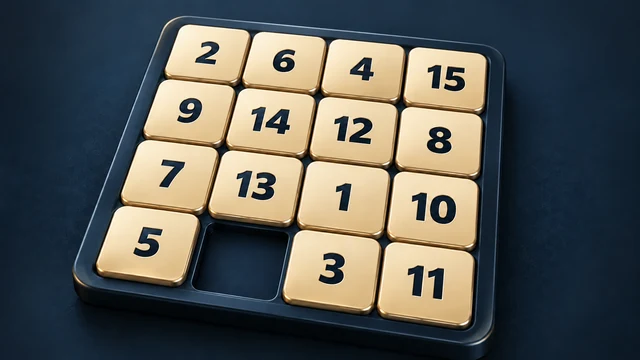
Plan the gap, protect solved rows and handle the final tile pairs in Zarocer’s 15 Puzzle. A practical sliding-puzzle strategy with a real board capture.
October 11, 2026 · ZarocerRead guideRead Circle TD’s closed circuit, surviving enemies and upcoming waves. Learn how to evaluate tower coverage, targeting and upgrade decisions.
October 11, 2026 · ZarocerRead guide
Look beyond the biggest flip in Reversi. Understand corners, mobility, frontier discs and endgame decisions with the playable Zarocer version.
October 11, 2026 · ZarocerRead guide
Practise Target Archery by separating wind correction from draw timing. Use the repeatable tournament, read both wind axes and compare your shots.
October 11, 2026 · ZarocerRead guide
Search the center letter, understand the seven-letter bonus and use the curated answer list in Zarocer Letter Hive. Includes practical examples.
October 12, 2026 · ZarocerRead guide
Learn how errors affect Typing Speed Race scores, read characters per minute correctly and compare practice attempts under consistent conditions.
October 12, 2026 · ZarocerRead guide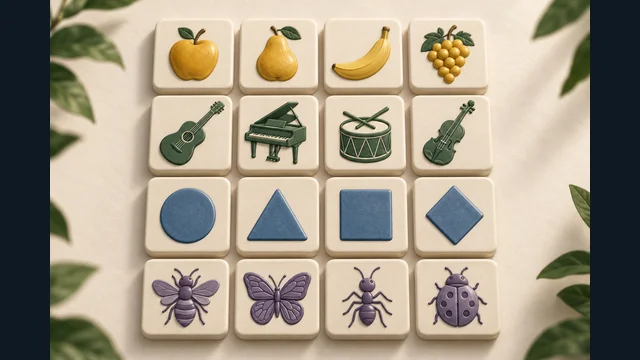
Find precise families in Word Quartets, check overlapping concepts and interpret near-miss feedback without wasting your four mistakes.
October 12, 2026 · ZarocerRead guide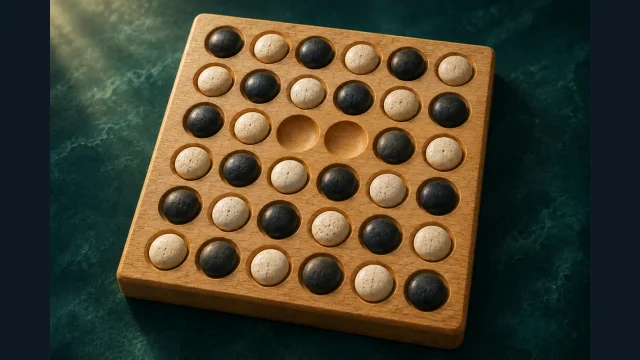
Learn the opening removals, straight capture chains and legal landing spaces in Zarocer’s 6×6 Kōnane. Plan for your next jump, not a capture score.
October 12, 2026 · ZarocerRead guide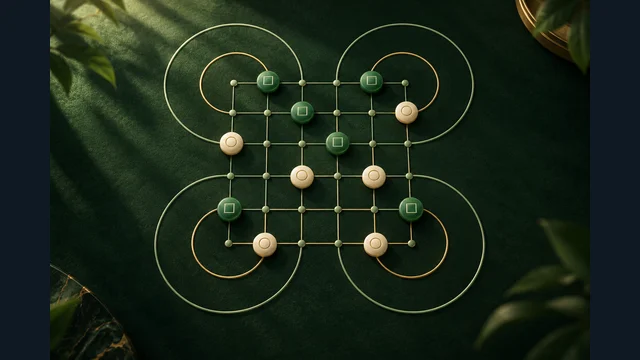
Trace legal loop captures in Zarocer Surakarta, identify blockers and compare landing positions. Includes Beta status and digital-rule boundaries.
October 12, 2026 · ZarocerRead guide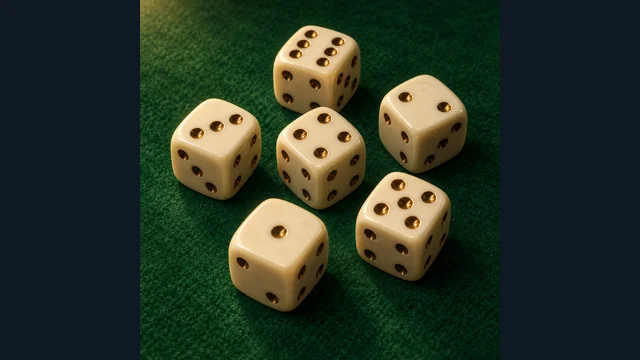
Understand banking, hot dice and one-die risk in Zarocer’s solo Farkle: ten turns, a 5,000-point goal and no straight or pair bonuses.
October 12, 2026 · ZarocerRead guide