
Guides
Prism Siege: movement first, upgrades next
Find your footing in Zarocer’s geometric survival game. Learn the controls, build useful upgrade combinations and resume your run.
October 8, 2026 · ZarocerRead guide
Find precise families in Word Quartets, check overlapping concepts and interpret near-miss feedback without wasting your four mistakes.
By Zarocer · October 12, 2026 · 7 min read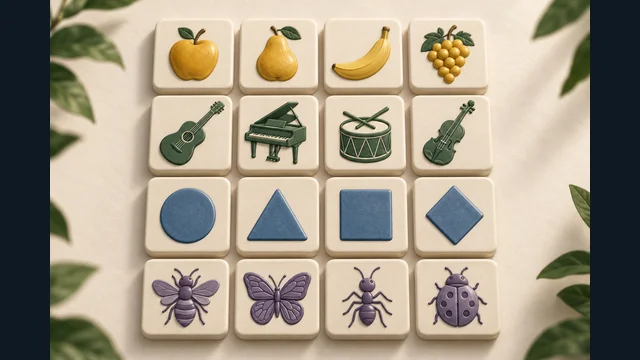
Word Quartets presents sixteen tiles and asks you to find four families of four concepts. A correct group reveals a row; an incorrect submission consumes one of four mistakes. That small error budget makes your first scan valuable. Read the whole board before committing to the first four items that look related. A concept can suggest several possible associations, and an appealing group may leave the remaining tiles without a coherent partition. The task is to resolve the entire board, not merely identify one vague connection.
This Zarocer puzzle uses familiar concepts and clear categories. It is not a promise to reproduce another publisher's daily answers or difficulty labels. Its own boards, vocabulary and feedback govern play. Practice offers boards to explore, while the daily challenge changes with the UTC date. Switching among the eleven interface languages does not change the underlying concepts or reset your game. A translation may help you recognize a term, but it does not create a different puzzle with a new solution.
Try to state a precise category for each candidate group. Four things that seem outdoorsy is weaker than four specific kinds of weather or four objects with one defined use. The examples are invented reasoning exercises, not live answers. A precise family gives you a way to test each tile independently. Ask whether all four meet the same condition, and whether a fifth tile also fits. If five plausible members appear, you may have found an overlap rather than the final four.
Consider an illustrative set containing violin, flute, piano, drum and trumpet. Instruments describes all five, so selecting four at random would not resolve the ambiguity. You need another condition or more information from the rest of the board. Word Quartets may use much simpler families, but the checking habit still helps: do not confuse an obvious shared property with proof that you chose the intended quartet. The puzzle's accepted groups determine completion, and examining the remaining concepts can expose a mistaken interpretation before it costs a life.
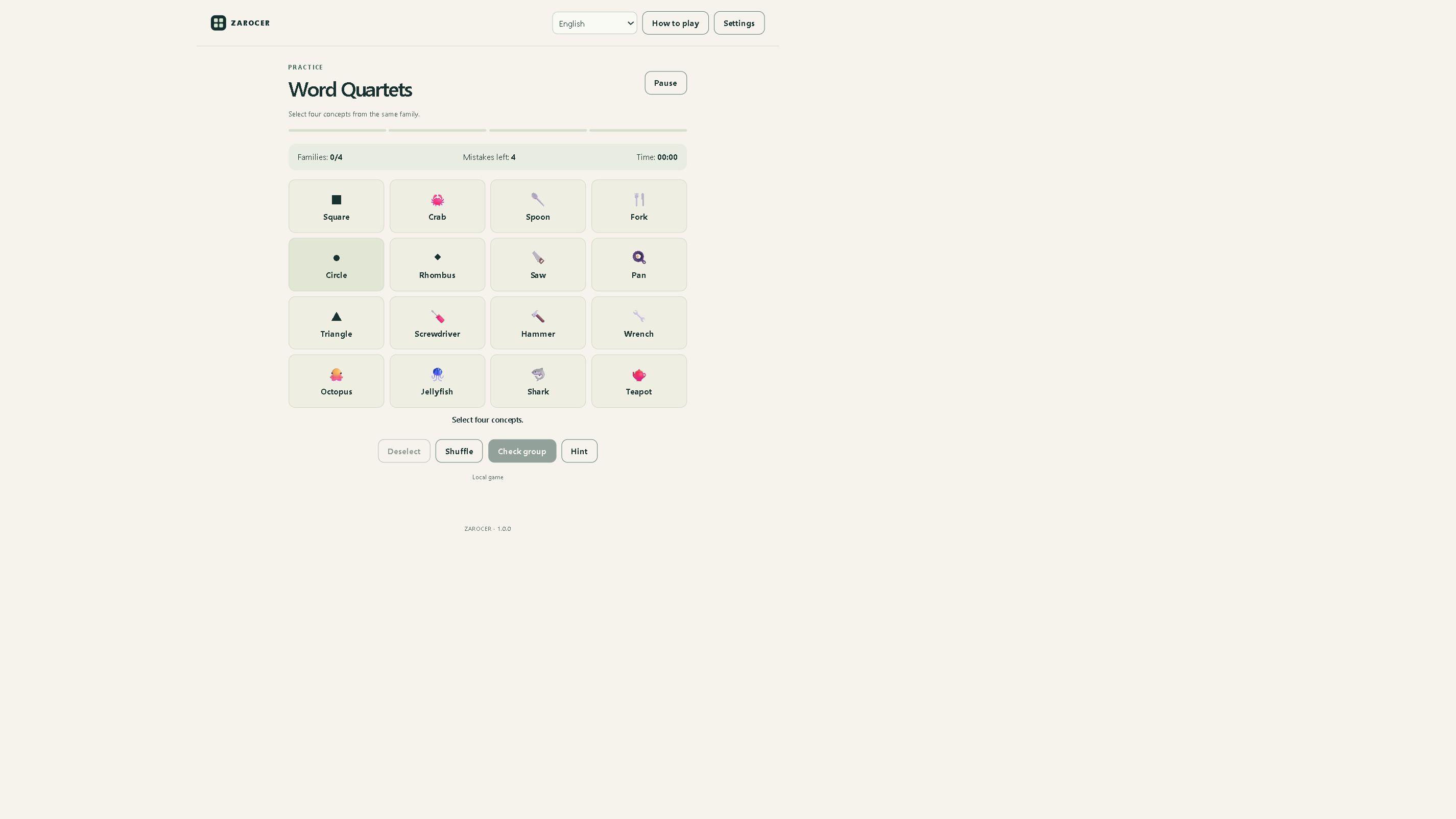
Mentally remove a proposed group and look at what would remain. Can you see plausible families among those tiles, or have you borrowed a member from another strong group? This does not require solving all sixteen at once. It means checking whether your first decision creates an avoidable contradiction. When two concepts compete for the same slot, inspect their alternative meanings and their possible partners. A tile with several everyday uses can be the bridge between competing ideas, so it deserves more attention than an unambiguous item.
Sometimes the easiest group is worth solving first because it reduces the visible choices. At other times, waiting is better because a strong candidate still has an uncertain fourth member. There is no need to force one universal order. Use the current evidence. A group whose four members share a precise family and leave a coherent remainder is a better submission than a broad category assembled only because you want progress. The goal is to spend mistakes on genuinely informative tests rather than on guesses you have not checked.
A near miss tells you that three concepts belong together. It does not automatically identify which selected item is wrong or which remaining item should replace it. Preserve the information without overreading it. Review all four choices, including the ones that felt obvious, then compare the unselected tiles against your proposed category. If you simply rotate the fourth tile repeatedly, you may waste the remaining attempts while keeping a mistaken assumption about the other three. Feedback narrows the problem; it does not finish it for you.
When discussing the puzzle with another person, explain the family rather than just naming the tile you want to swap. Someone who reads the same group differently can reveal the assumption you missed. You can also say the four concepts aloud or mentally describe what each means. This is a practical way to escape a repeated visual pattern. It is not a claim that collaboration changes the game's rules or creates an online multiplayer mode. Word Quartets remains the published single-player experience, even if you discuss it together.
Shuffle changes tile order. It can help when neighboring items keep suggesting an association that you already know is weak. However, the concepts and accepted families remain the same. Moving a tile beside a different neighbor does not increase its likelihood of belonging to that neighbor's group. After shuffling, repeat the category test. If you still cannot articulate the shared condition, the rearrangement has changed your attention but has not supplied a solution. Distinguishing those effects keeps the visual reset useful without making it a ritual.
Optional symbols can support recognition, particularly when a word is unfamiliar or when the display is small. Check the concept text as well, because a symbol can represent more than one object or meaning. A picture of an item does not necessarily reveal the intended family. Use it to identify the tile, then test the association. Language switching likewise preserves the underlying puzzle. These tools help you read the board; they do not justify assuming that every illustrated object belongs to a visual category.
A hint marks two concepts and makes the run local only. That is useful when you want to understand a board rather than preserve an unaided attempt. Ask what relationship links the marked pair, then search for the other two members. You can still practise naming a precise family and checking the remainder. Do not treat the hint as a failure to hide from yourself. Assisted play and independent solving serve different purposes, and the game's distinction helps keep their results honest.
Restored games also remain local. Active progress is saved in the same browser where storage is available, so returning later can preserve the board you were working through. It does not imply cloud synchronization or an automatic public ranking entry. Keep the same browser and domain, and avoid clearing site data if you want to resume. For a longer discussion, pause and return rather than rushing four uncertain submissions. A favorite can help you find the page again but does not replace the native saved state.
After solving or exhausting the attempts, revisit the family that caused the most uncertainty. Was the problem a word you did not know, an overly broad category, a fifth plausible member or a mistaken use of near-miss feedback? Name that cause. It gives you a specific habit to try on the next board. Completing a puzzle is satisfying, but understanding why one submission failed can be equally useful. This review should stay proportionate: you do not need a spreadsheet or a memorized answer archive to enjoy a short association game.
If you like constructing language rather than grouping it, Sentence Building asks you to arrange four phrase tiles into authored sentences. If you prefer discovering words from a limited letter set, Letter Hive offers untimed practice and a shorter daily format. These are neighboring activities, not interchangeable measures of intelligence or vocabulary. Choose Word Quartets when you want to compare meanings and test a partition. Read the full board, name the family, check the remainder and use each piece of feedback for only what it actually proves.
Find your footing in Zarocer’s geometric survival game. Learn the controls, build useful upgrade combinations and resume your run.
October 8, 2026 · ZarocerRead guide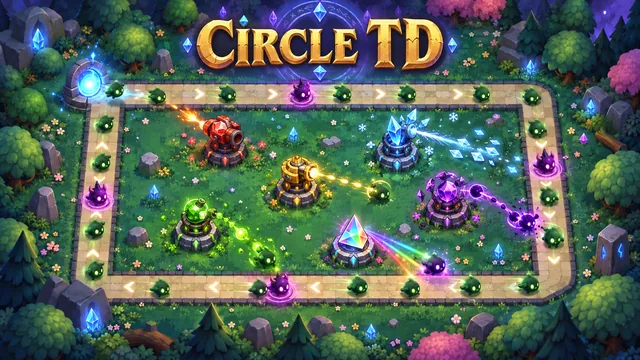
A practical first stop before defending the Circle: explore the native guide, choose your mode and return to a saved match.
October 8, 2026 · ZarocerRead guideUnderstand what a favorite saves, how Continue Playing works and why game progress stays with your browser.
October 8, 2026 · ZarocerRead guideUse the game’s supported devices, touch controls and screen orientation to make your next mobile session more comfortable.
October 8, 2026 · ZarocerRead guide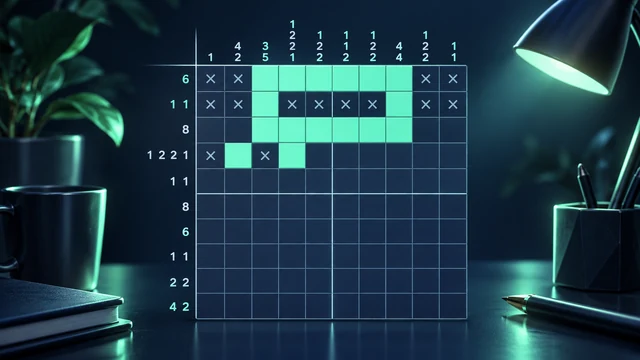
Compare Nonogram Atelier, Hitori and Futoshiki through worked deductions, real controls and different rules. Choose your next logic puzzle on Zarocer.
October 11, 2026 · ZarocerRead guide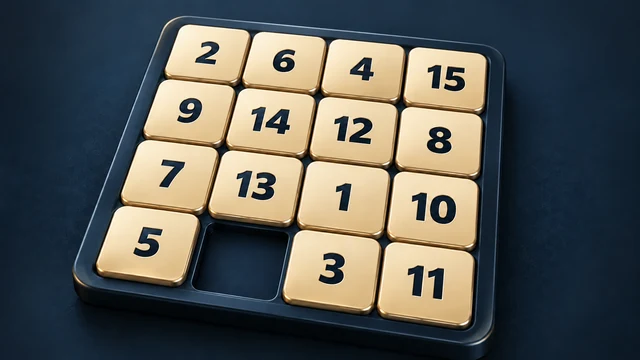
Plan the gap, protect solved rows and handle the final tile pairs in Zarocer’s 15 Puzzle. A practical sliding-puzzle strategy with a real board capture.
October 11, 2026 · ZarocerRead guideRead Circle TD’s closed circuit, surviving enemies and upcoming waves. Learn how to evaluate tower coverage, targeting and upgrade decisions.
October 11, 2026 · ZarocerRead guide
Look beyond the biggest flip in Reversi. Understand corners, mobility, frontier discs and endgame decisions with the playable Zarocer version.
October 11, 2026 · ZarocerRead guide
Practise Target Archery by separating wind correction from draw timing. Use the repeatable tournament, read both wind axes and compare your shots.
October 11, 2026 · ZarocerRead guide
Search the center letter, understand the seven-letter bonus and use the curated answer list in Zarocer Letter Hive. Includes practical examples.
October 12, 2026 · ZarocerRead guide
Learn how errors affect Typing Speed Race scores, read characters per minute correctly and compare practice attempts under consistent conditions.
October 12, 2026 · ZarocerRead guide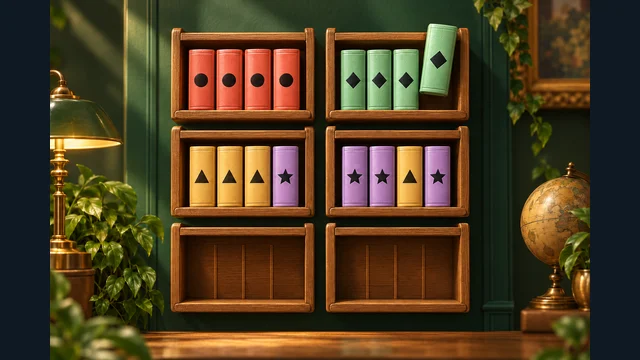
Plan legal book transfers in Shelf Sorting. Read exposed symbols, protect working space and use a concrete sequence to uncover a new empty shelf.
October 12, 2026 · ZarocerRead guide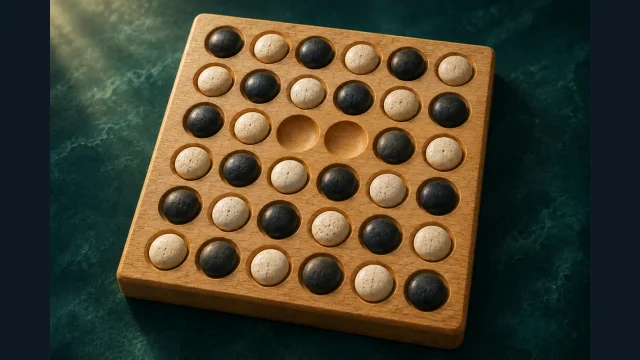
Learn the opening removals, straight capture chains and legal landing spaces in Zarocer’s 6×6 Kōnane. Plan for your next jump, not a capture score.
October 12, 2026 · ZarocerRead guide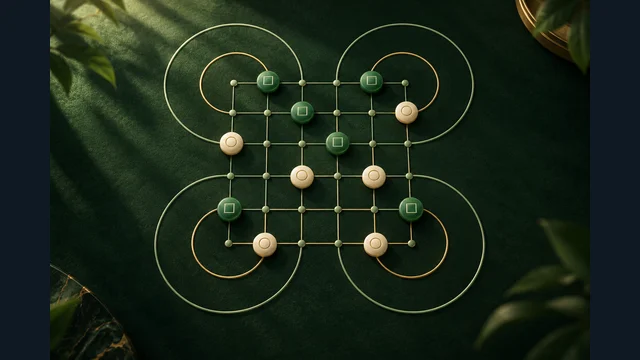
Trace legal loop captures in Zarocer Surakarta, identify blockers and compare landing positions. Includes Beta status and digital-rule boundaries.
October 12, 2026 · ZarocerRead guide
Understand banking, hot dice and one-die risk in Zarocer’s solo Farkle: ten turns, a 5,000-point goal and no straight or pair bonuses.
October 12, 2026 · ZarocerRead guide