
Portal news
The Zarocer blog is now live
Explore the new home for original game guides and practical browser gaming tips.
October 8, 2026 · ZarocerRead story
Number Ladder’s October 10 catalog release brings checkpoint paths, a 12-level Journey, practice sizes and a shared daily 5 × 5 board.
By Zarocer · October 11, 2026 · 7 min read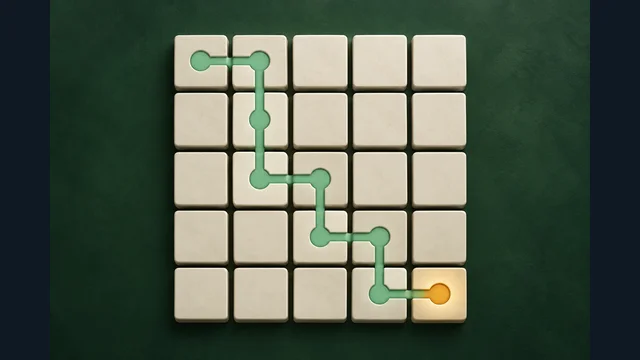
Number Ladder is recorded as published in Zarocer's catalog on October 10, 2026, with reviewed version 1.0.0. The puzzle begins at one and asks the player to fill a grid by placing each next number in an adjacent square. Existing numbered checkpoints must be reached at their indicated step. Finding a route to a checkpoint is not enough: the length of that route must match the number printed there.
The available build includes a twelve-level Journey, size-selectable practice and a daily challenge. This report explains those verified features and the visible rules, without announcing a future campaign expansion or functioning public rankings. Its distinctive challenge is combining immediate movement with a longer route. A locally legal step can still leave a checkpoint unreachable at the correct moment or isolate cells you will need to visit later.
The next square must share a side with the current one. Diagonal movement is not permitted. Each square is visited once, and the board must be filled to win. These rules create a constrained route through a fixed grid. You are not simply clicking the printed numbers in any order, and you cannot revisit an earlier square to create extra steps before reaching a checkpoint.
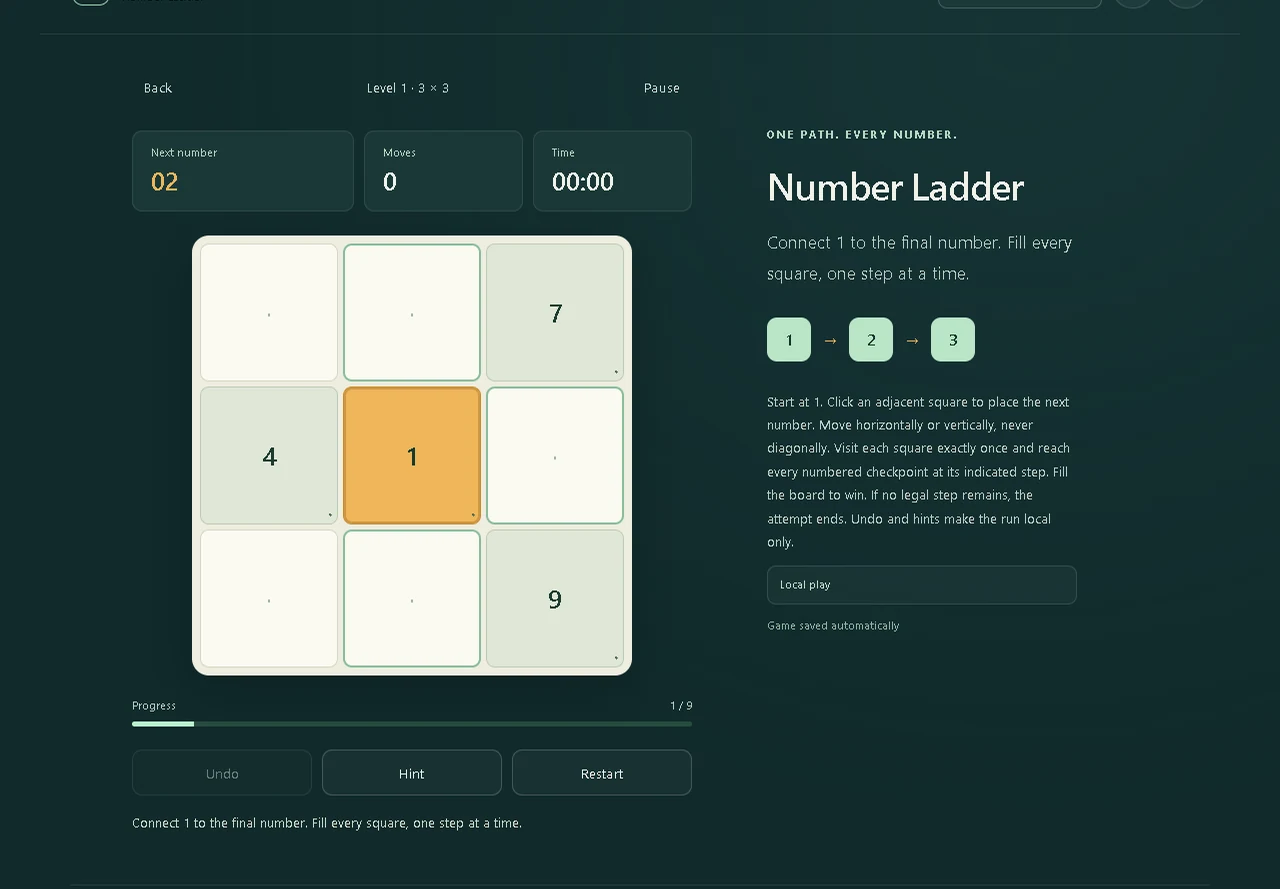
The English screenshot shows the first three-by-three level, with the starting one in the center and checkpoints at four, seven and nine. The next-number display reads two. This is an actual state from the reviewed build, not a diagram with invented targets. Examine how the corners and edges restrict movement before choosing the first adjacent square; their limited exits matter as soon as the route begins.
Suppose the current number is four and the next printed checkpoint is seven. You must reach that checkpoint after placing five and six along a legal path. A route that reaches it one step too early is not made correct by waiting, because every move places the next number. A route that takes too many steps is equally unsuitable. The checkpoint therefore restricts the shape of the segment leading into it.
That is a useful way to read the board in pieces. Inspect the next checkpoint and count how many placements remain before it, then compare that count with the neighboring routes. This does not guarantee that the first segment you find will permit a complete solution. You still need to preserve access to the later cells. Checkpoints organize the reasoning, but the entire board remains one connected route.
A route can satisfy the next checkpoint while leaving an unvisited square trapped behind occupied cells. Because the rules forbid revisiting a square, that isolated cell cannot simply be collected on a later detour. This is why Number Ladder rewards looking at the region you are leaving behind, not only at the location of the next printed number.
Corners are particularly useful to inspect because they have fewer neighbors. If both possible approaches to an unvisited corner disappear, the route cannot cover the whole board. That is a consequence of the visible movement rule, not an additional hidden requirement. Use it to evaluate a tempting step before committing. The game gives a compact setting in which the order of otherwise legal moves can determine whether any complete continuation remains possible.
The twelve-level Journey grows from three-by-three boards to six-by-six puzzles. That progression increases the amount of route information you manage, but it does not mean that every larger board uses a new movement rule. Horizontal and vertical adjacency, one visit per cell and exact checkpoint timing remain the core task. Learn those relationships on a smaller board before judging a later grid solely by its dimensions.
Practice lets players choose a board size, providing another way to revisit a comfortable scale. A useful session can focus on one skill, such as noticing isolated cells or counting the remaining steps to a checkpoint. The release does not promise educational certification or a measurable improvement in reasoning ability. It offers a route-planning game whose visible constraints can be explored at a pace chosen by the player.
Daily mode presents the same five-by-five puzzle during the UTC day. That creates a dated native challenge alongside Journey and practice. A shared board does not establish that portal-wide public rankings are connected. The catalog specifically distinguishes assisted and restored attempts, which remain local and are excluded from competitive submission under the reviewed behavior.
Hints and undo can still be useful when your purpose is understanding a route. The distinction is about the attempt's classification, not a claim that assistance is inappropriate for all play. Read the current local-result label before assuming that a completed daily puzzle produced a public score. This article does not activate competitive services, announce a leaderboard schedule or modify any ranking eligibility rule.
If no legal step remains, use the available undo or restart controls to explore another route. Before undoing, inspect why the path stopped. Did you reach a checkpoint at the wrong step, or did you consume the only passage into an unvisited region? The difference matters because the next route should change the decision that caused the problem, not simply repeat it with a different final click.
Try reviewing a short segment rather than erasing every move immediately. If the board was still workable several steps earlier, identify the first move that closed off the necessary area. This is an ordinary gameplay method for understanding consequences. It does not require editing saves, inspecting private result data or altering the published build. The available controls already let you revisit a decision within the game's native rules.
Mouse and touch users select an adjacent square to place the next number. The documented keyboard controls move focus with arrow keys and use Enter or Space to select, while Escape opens pause. Focus movement and route movement are not the same action: moving focus to inspect a square does not make a diagonal route legal or allow revisiting a cell.
On a small screen, take a moment to read the current number and highlighted legal options before tapping. The interface is about deliberate selection, not rapid reaction. The screenshot's desktop layout is a useful visual reference but is not a certification of every device's native installation behavior. Check the playable page for supported devices and use the controls in the current build rather than assuming that all browser puzzle games share shortcuts.
Number Ladder includes eleven internal languages and native local continuation. Those features belong to one reviewed game version. They do not generate eleven public English-portal equivalents, synchronize progress across domains or create an account-based backup. A player can change the interface language while keeping the same underlying route-planning rules and game identity.
Return through the same browser profile and Zarocer domain when you want to retain a saved session. A favorite is a navigation shortcut, not a copy of the current grid. Assisted and restored attempts retain their documented local classification. This release report does not recommend replacing historical saves, clearing user data or enabling new competitive behavior. It describes the available continuation feature and its relevant limits.
Untangle Puzzle moves network nodes while preserving their connections. Magnets Puzzle assigns polarity to paired cells and matches exact counts. Number Ladder leaves the grid fixed and builds a sequence through it. The three titles therefore present different kinds of spatial or numerical reasoning, even when they share the Puzzle category and were incorporated in the same catalog group.
Choose Number Ladder when you enjoy planning a route with checkpoints, and begin with a small Journey level if the format is unfamiliar. Count the steps to the next printed number, preserve access to unused cells and inspect a blockage before undoing. The catalog's publication date remains October 10; this report documents the available release for readers afterward. Later features should be described from later evidence, not assumed from the current version's potential.
Explore the new home for original game guides and practical browser gaming tips.
October 8, 2026 · ZarocerRead story
Two-column mobile category grids, a visual category directory and answers to common playing questions.
October 8, 2026 · ZarocerRead story
Flag Quiz’s October 10 catalog release brings 20-question rounds, 30 flags, missed-answer review and a UTC daily challenge. Explore the available build.
October 11, 2026 · ZarocerRead story
Explore Atlas Sprint’s October 10 catalog release: 93 selectable countries, continent practice, map controls and a 12-country daily challenge.
October 11, 2026 · ZarocerRead story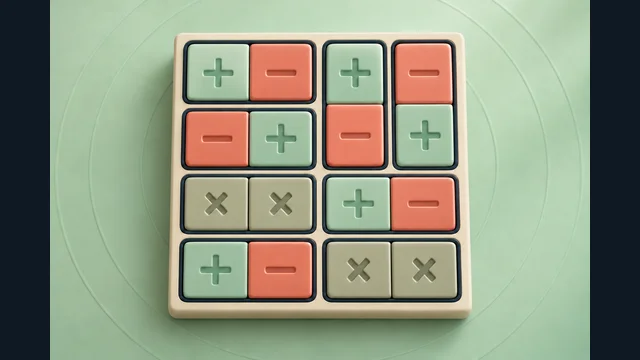
Magnets Puzzle’s October 10 catalog release combines paired poles, exact row and column clues, progressive campaign boards and a UTC daily puzzle.
October 11, 2026 · ZarocerRead story
Untangle Puzzle’s October 10 release offers 24 Journey stages, a daily network and a 90-second mode. See the real English board and available controls.
October 11, 2026 · ZarocerRead story
Zarocer’s October 12 release adds Letter Hive, Word Quartets, Sentence Building and Typing Speed Race. Explore their distinct modes and launch limits.
October 12, 2026 · ZarocerRead story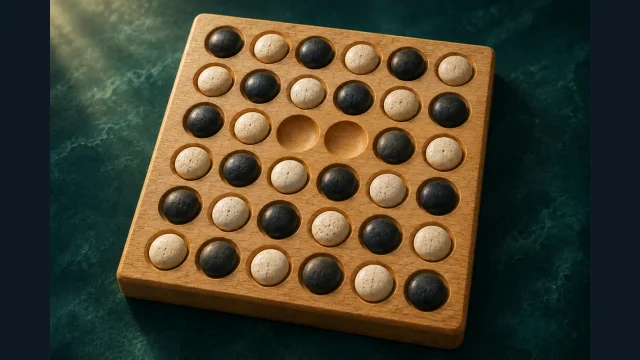
Kōnane, Surakarta and Game of the Goose are now in Zarocer’s catalog. Compare movement systems, same-device play and the two Beta releases.
October 12, 2026 · ZarocerRead story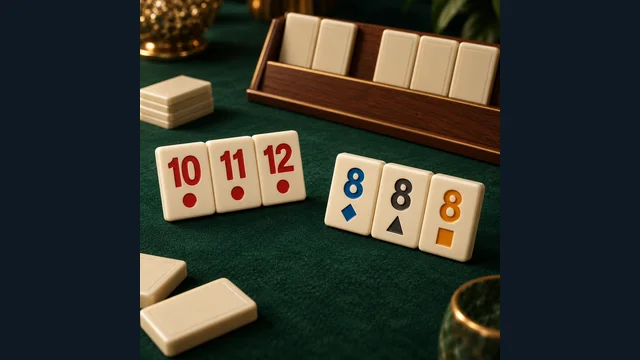
Tile Rummy 1.2.0 is live on Zarocer. Read the current variant, daily deal and reported old-save compatibility without changing the established game URL.
October 12, 2026 · ZarocerRead story